Arrondissement 1
Numbers: 1, 2
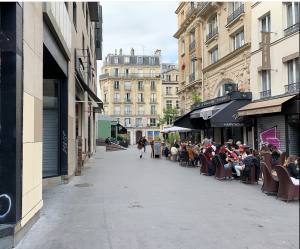
Now a short pedestrian-only street, it is one of Paris’ oldest, dating from the 11th century. Much of its original length has been eaten up by other roads, and the origins of its name are uncertain. Some believe it may come from ‘Mauvais Détour’, a wrong turning. Others that it refers to the revenues from the market on the Quai d’Orsay given to the Bishop of Paris in 1205.
The 1933 ‘Brown book on the Reichstag fire’ was published by Willi Münzenberg for the Comité d’aide et de secours aux victimes du fascisme hitlérien (International Committee in Support of the Victimes of Hitlerian fascism) at No 1. A German Communist who had become disenchanted with Stalin, he lived intermittently in Paris from 1933 to 1940 and was murdered or committed suicide in October that year while trying to escape the German invasion.
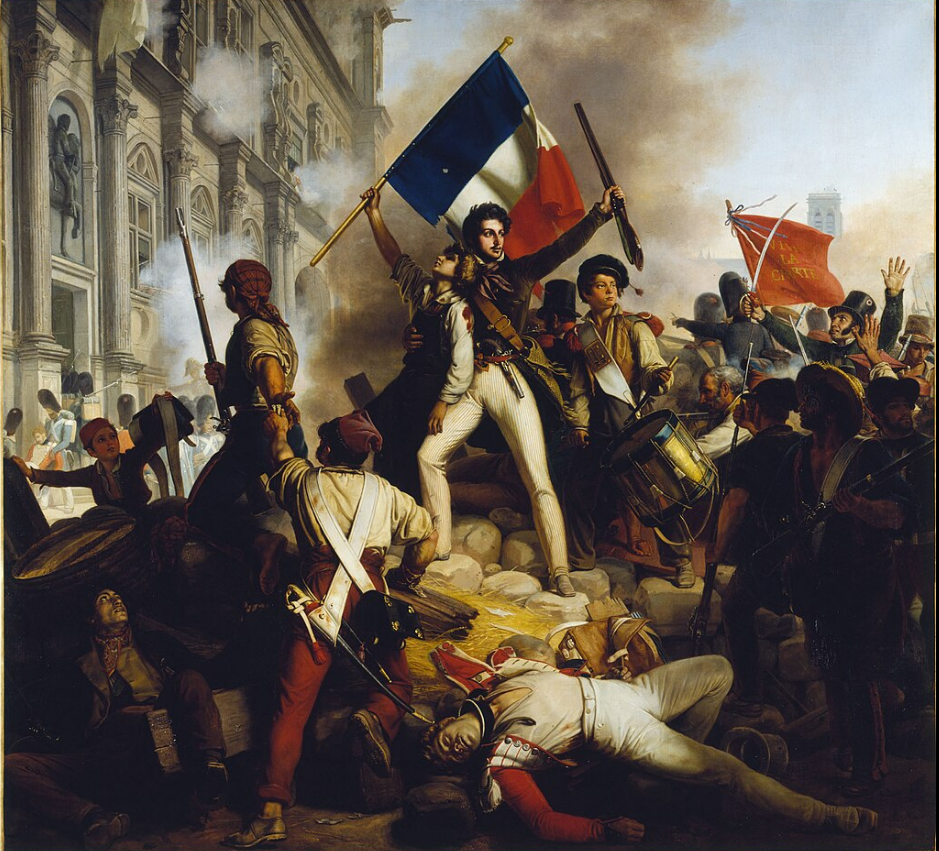
In Les Misérables Hugo placed the barricade where Gavroche on 6 June 1832 was killed outside the Café Corinthe at No. 2. Hugo was perhaps inspired to depict Gavroche by the painting by Jean-Victor Schnetz that, like Delacroix‘s much more famous painting, was commissioned by Louis-Philippe’s government in 1830 but which was never displayed in public until his overthrow in 1848 and the establishment of the Second Republic.