
Arrondissement 10
Numbers: 1-2, 10, 11-15, 63
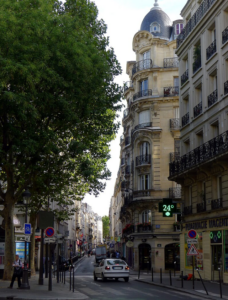
A long road dating from 1777 it took the name of one of its earliest developers. In the 21st century where it crosses the Boulevard Magenta has become one of Paris’ worst traffic accident hot-spots.
Several sculptors and painters used workshop space at No. 63, including Pierre-Jean David d’Angers, who sculpted a bust of Victor Hugo amongst many others, and Auguste Rodin.
This same address was where Victor Hugo described the massacre of several opponents of the December 2 1851 coup d’État by Louis-Napoleon Bonaparte in his History of a Crime.
In 1864 the bronze foundry there experienced a successful strike for the reduction of the working day to 10 hours.
On May 25 1871 during the ‘bloody week’ of the Paris Commune a barricade across the road between numbers 1 and 2 held up the advance of the Versailles troops through particularly strong resistance.
On July 14 1889 the congress of the Federation of the Socialist Workers of France took place in the Lancry Rooms at Nos. 11-15. Led by the Possiblist Paul Brousse. This reformist congress was held in opposition to the Marxist French Workers’ Party held the same day.
The local office of the Kultur Lige, a Jewish Bund affiliate of the Communist International linked to the French Communist Party was at No. 10. In 1923 it published a Yiddish journal called New Press (Naïe Presse) and held meetings in the Lancry rooms next door.
The Lancry Rooms also saw the launch of a campaign to boycott German goods by 15 anti-fascist organisations in 1933 and the 1946 call by Marceau Pivert to merge the SFIO wit the former members of his Workers and Peasants Socialist Party (Parti socialiste ouvrier et paysan).


