
Arrondissement 15
A road named in 2016 after an immigrant resistance activist who was gassed to death in 1945 testifies to the need to keep such stories alive.
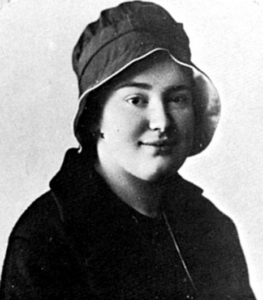
Twice married and with three children Maria Skobtsova escaped Russia in late 1919 and arrived in Paris in 1923, one of many White refugees . By 1932 she had risen through the Orthodox church to become the nun Mère Marie. She opened the small church at No. 77 in 1935, offering support for poor Russian migrants.
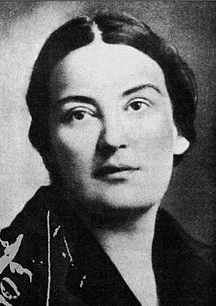
When the Germans occupied Paris Mère Marie was aware of the dangers of Nazi ideology for her Slav congregation as well as for her Christianity and became a resistant. She hid escaping prisoners of war at No. 77 and with the worker-priest Dimitri Klépinine began to produce hundreds of false baptism certificates for both communists and Jews.
In July 1942 she hid three Jewish children about to be captured and taken in the biggest purge by the Parisian police of Jews, the Rafle du Vélodrome d’Hiver.
Skobtsova’s 21-year-old son Youri (Georges) was arrested by the Gestapo on February 8 1943 after a search of No. 77 who found a letter in his pocket from a Jew requesting a baptism certificate. The following day first Klépinine and then Skobtsova were arrested after presenting themselves in exchange for the liberation of Youri.
Klépinine was first taken to the Royallieu transit camp, predominantly of ‘political’ prisoners, and then in cattle trucks on December 14 1943 to Buchenwald. From there with other Russian prisoners he was taken to the Mittelbau-Dora camp and forced to work to his death aged 39 on February 9 1944 building the V2 rocket site. His body was then moved to Buchenwald to be burnt in one of its four crematoria. In 2004 he was declared a Saint and a Martyr by the Greek Orthodox Church.
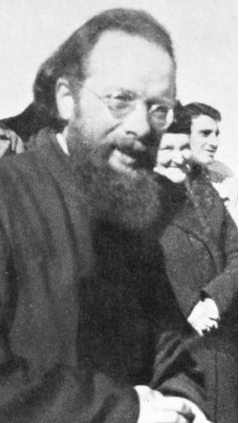
Klépinine was first taken to the Royallieu transit camp, predominantly of ‘political’ prisoners, and then in cattle trucks on December 14 1943 to Buchenwald. From there with other Russian prisoners he was taken to the Mittelbau-Dora camp and forced to work to his death on February 9 1944 building the V2 rocket site.
Skobtsova was deported to Ravensbruck. On March 31 1945 she took the place of a Jewish woman being sent to the gas chamber.
She was murdered aged 46 and much later was recognised as one of the Righteous by Yad Vashem in 2005, glorified by the Greek Orthodox church in 2004 and had this road named after her in Paris in 2013 and inaugurated in the presence of the Russian ambassor to France in 2016.