
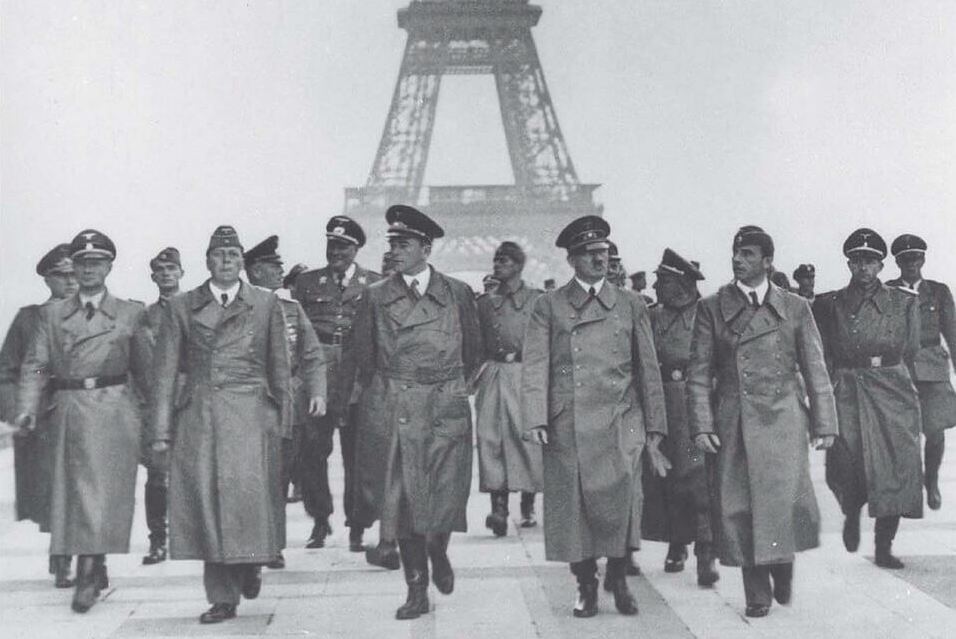
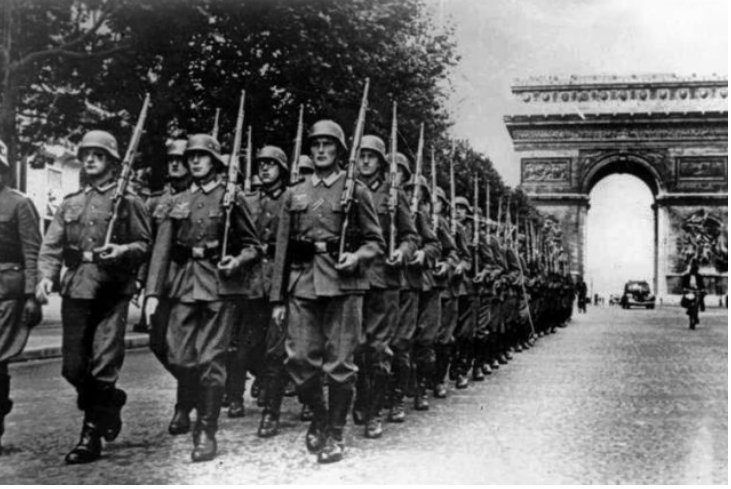
German troops marched into Paris, known as the City of Light from its close association with the 18th century enlightenment, on its darkest day, June 14 1940.
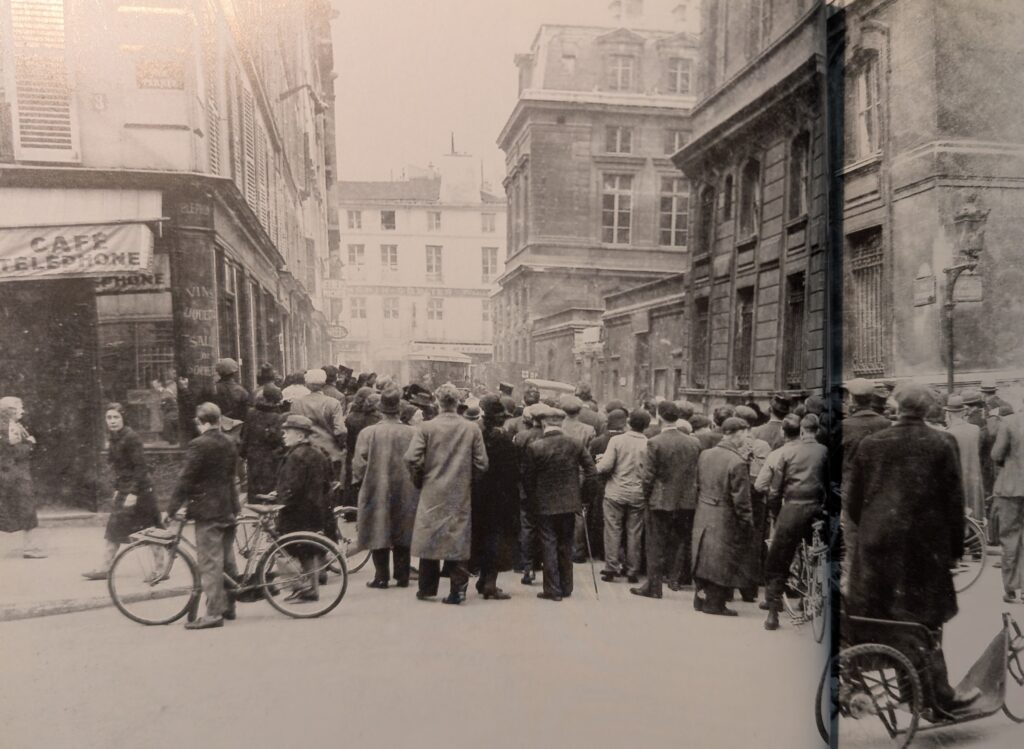
The Germans were only shot at four times, losing three soldiers but killing the six French who attacked them. It was another 14 months before another French man would again shoot at a German soldier in Paris.
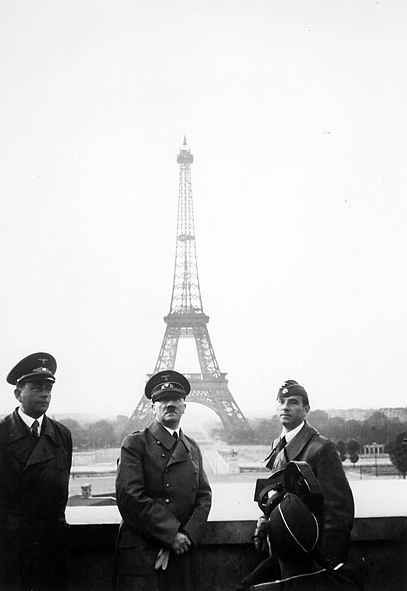
On June 23 1940 Hitler paid his first and last visit to Paris on an early cold misty Sunday morning.
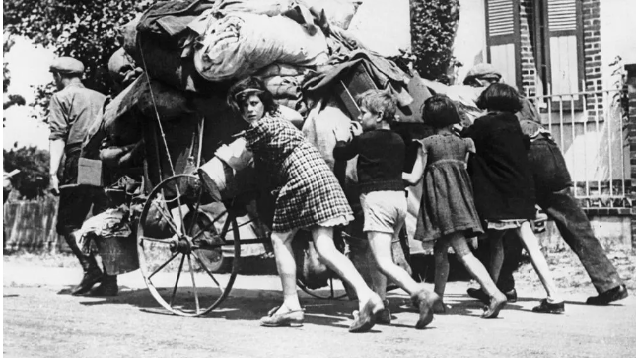
Despair was felt by nearly everyone at the humiliating defeat of the French army after just five weeks of active fighting between May 10 and June 14. The French casualty figures of several thousand civilians along with 62,000 soldiers killed and 123,000 wounded were dwarfed by the 1,800,000 prisoners taken, nearly all of whom would subsequently be moved to Germany to work in its arms factories.
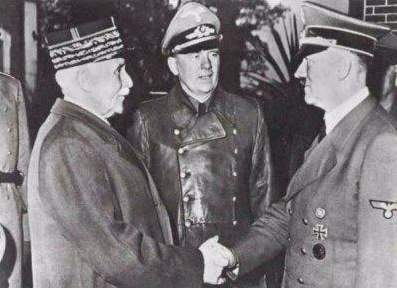
The Armistice of June 22 endorsed that defeat, as did the 84-year-old Marshal Petain‘s handshake with Hitler and his call for collaboration. For most French it appeared inevitable, as if there was no alternative. On the communist left deep shame was still felt by most at the betrayal of anti-fascism by Russia with the August 24 1939 Hitler-Stalin pact.
Within days, however, resistances began.
General De Gaulle’s June 18 call from London to continue the fight for a free France was heard by very few people in France. Fewer than 3,000 French soldiers joined Free France in London out of the 140,000 French troops evacuated to England between May 24 and June 8 from Dunkirk and from Narvik.
But even in the despair of 1940 dozens of individuals within France were thinking there was ‘a need to do something’ and acted upon these thoughts. Timidly at first they became hundreds as the new Vichy government introduced laws against Jews and free masons.
Through the whole period of occupation, from June 14 1940 to August 22 1944, acting for or with the resistance required considerable courage and determination. Those who resisted remained a small minority throughout.
When the Communist Party finally joined the struggle after Hitler’s invasion of Russia on June 22 1941, the numbers of resistance activists increased to several thousands, and many of the new resistors had had experience fighting in the French International Brigade.
Both the forms of resistance and the networks of resistors varied enormously. Some acts, big and small, were carried out individually. Most were as part of 256 different organisations of varying sizes from a few individuals to several thousands, many of which were grouped nationally in one or other of 23 different resistance movements.
The initial steps to creating the Resistance were taken by various socialists, trade unionists, patriots, former World War 1 veterans and by several Jewish refugees from Eastern Europe. After Hitler’s invasion of the Soviet Union in July 1941 the Communist Party established several resistance groups, one of which was the first to kill a German soldier in Paris.
The Rafle du Vel d’Hiv, the infamous round-up of 28,000 Jews by the Paris police on July 16 and 17 1942, made many more realise that resistance was the only answer.
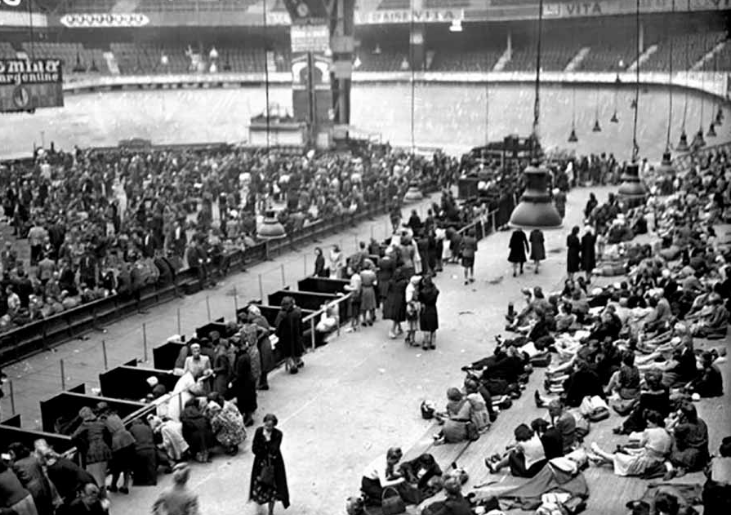

French police began seizing Jewish migrants in early 1941, but the real escalation came after Adolf Eichmann visited Paris in 1942. By then four internment and transit camps, the two military forts and two prisons shown in the map below were in operation primarily targetting Jews and resistance fighters.
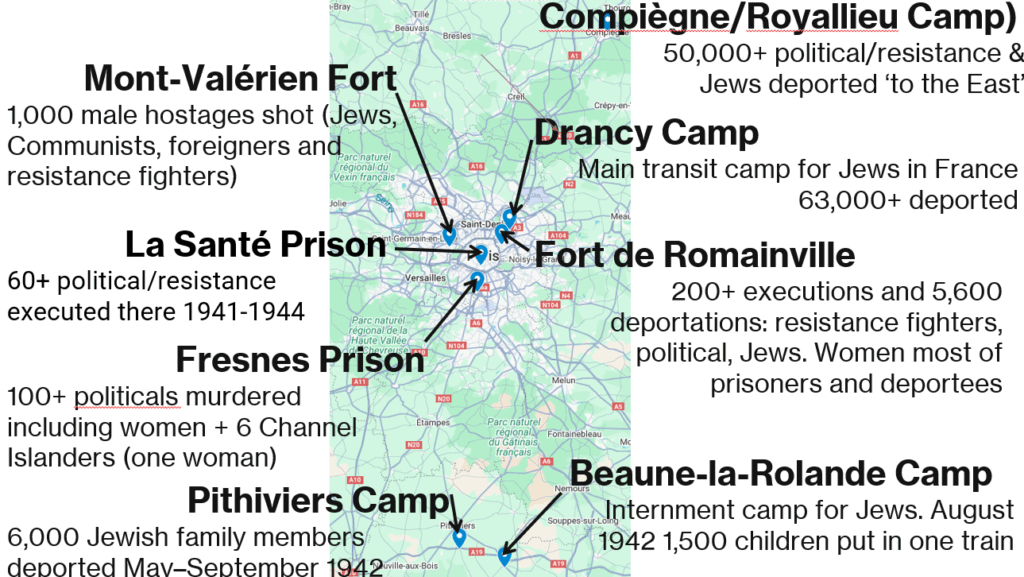
Resistances
Here are some of the places in Paris where the few who began resisting in the summer of 1940 lived or carried out their acts of resistance and who by August 1944 had become the many, despite many thousands losing their lives to fascism.


