
Arrondissement 4
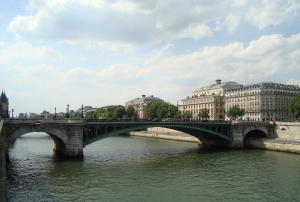
Bridge over the Seine from the Quai de Gesvres to the Quai de la Corse
Today’s Notre-Dame bridge was built in 1853, and reduced from five to three arches in 1912. But the Romans built the first bridge here as part of their North-South axis across the Seine. That bridge lasted until 886, when it was replaced by a bridge built on wooden piers, to which were attached flour mills. This survived until the floods of 1406, and its wooden replacement until the flood of 1499. Its stone pier follow-up was finally completed in 1512, and its 61 six-story houses became the most sought-after in Paris for shops, stores and prestigious living.
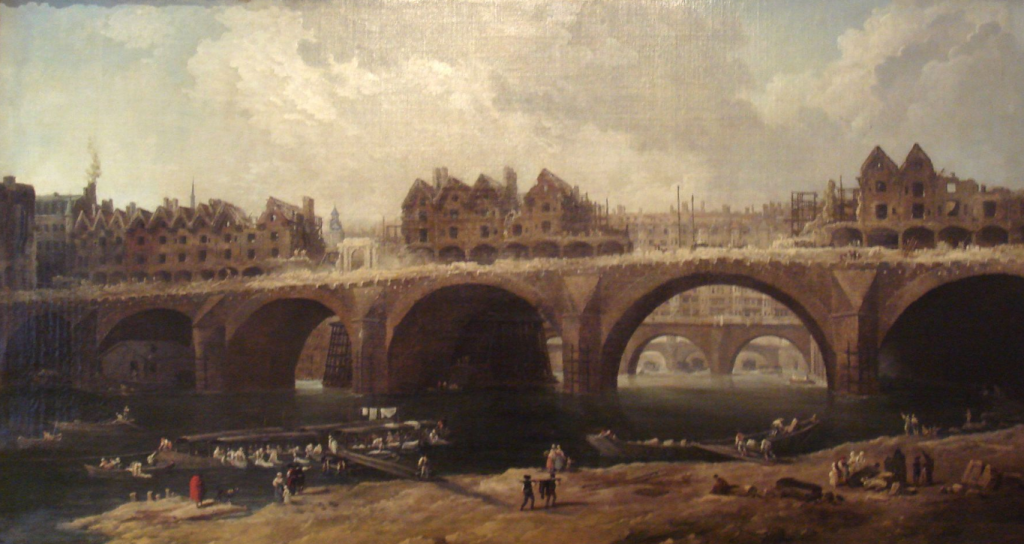
By 1786 the houses on the bridge were in such a bad state of repair that Louis XVI ordered their demolition. This did not make the bridge any safer for those on the river. The five arches were obstacles that gave the bridge its nickname: ‘Devil’s bridge‘.
It’s no surprise, then, that the end of the Bridge on the right bank (near the Town Hall) is where Victor Hugo decided to stage the suicide of Javert, the fictitious representative of law and order without any humanity, in Les Misérables.


