
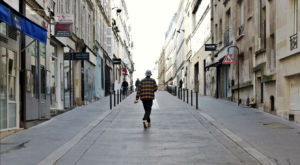
Arrondissement 9
Numbers: 26, 30, 37, 41, 44, 45
Renamed in 2019 after one of the abbesses of the Montmartre Abbey for many years since 1760 it had been known simply as the Rue Tour d’Auvergne. It was decided to change it to the current name as a contribution to acknowledging the important role of women in the history of Paris.
Georges Bizet, the composer of Carmen, was born in No. 26 in 1838 while the most popular song-writer of his time, Pierre-Jean de Béranger, lived at no 30.
Victor Hugo lived at No. 37 from 1848 to 1851. He moved in after the part he played in suppressing the June 1848 insurrection against the ending of workshops for the unemployed. This was where in December 1848 Louis-Napoléon Bonaparte met Hugo and promised he had no intention of declaring himself Emperor to gain Hugo’s support for his candidature for President of the Second Republic.
In December 1851 Hugo moved briefly to No. 41, which was where the police searched unsuccessfully for him on December 2 1851 while he escaped through the gardens.
In 1839 Chopin performed his Funeral March for the first time at No. 45 in the Le Carillon cabaret.
A colonel of the Commune and member of the Commission of the National Guard Federation in 1871, Simon Charles Mayer, lived at No. 44.


