Stéphane Hessel lived in Paris from 1924 and was naturalised French in 1937.
A French and United Nations diplomat for 40 years, he was a founder of the socialist think-tank, the Jean-Moulin Club, close to Pierre Mendès France. Campaigner for the regularisation of migrant workers he joined the Russell Tribunal on Palestine in 2009 and his 2010 call for a ‘peaceful insurrection’ against liberalism sold half a million copies.
Republican, poet, dramatist and novelist of the Romantic movement, Hugo is considered to be one of the greatest French writers, but he was also a major political opponent of Napoleon III, the opportunistic nephew of Louis-Napoléon Bonaparte who had seized power himself on November 9 1799 (the 18th Brumaire of Year 8 in the revolutionary calendar) and then crowned himself Emperor in 1804.
In the 21st century Hugo remains globally famous for Notre-Dame de Paris (renamedThe Hunchback of Notre Dame by its English publisher) and for LesMisérables, a novel turned into plays, films, TV series and the French (1980) and English language (1985) musical, which is still running in London at the time of writing (2024).
Hugo’s life was a journey, both physical and political. He was not born in Paris but lived there for the two-thirds of his life when he was not in exile in the Channel Islands or Belgium. Politically he moved from being a teenage monarchist to a Napoleon Bonaparte sympathiser and finally in the second half of his 83-year-long life to becoming a republican who chose to be taken to his grave at the Panthéon in Paris in a pauper’s coffin.
Hugo’s pauper coffin was followed in a procession by 100,000 people and watched by two million lining the streets as it moved slowly towards the Panthéon on June 1 1885.
Elected a Delegate from Paris to the Second and Third Republic national assemblies in 1848 and in 1870, Victor Hugo’s larger than life politics, locations and loves were a journey that dovetailed with the history of France through most of the 19th century.
One of Hugo’s English biographers began his 700-page study describing his life as full of contradictions: ‘the militant monarchist and the revolutionary socialist; the symbol of a corrupt aristocracy and defender of the misérables; a repressor of revolts and instigator of riots‘ (Graham Robb, 1997). An American detective story writer (Cara Black, 1999) appears disappointed to find his flat in the Place des Vosges didn’t reflect his supposed politics: ‘The room captured his essence, dark and narcissistic. The only touch that could be called socialist was the heavy peasant glassware on a mahogany sideboard‘.
Calling Hugo a ‘socialist’, a ‘revolutionary’ and ‘instigator or riots’ is inaccurate. He was never a socialist, if wanting wealth and power to be distributed more equally is in anyway defined as socialism. But Hugo’s life, his two decades-long exile, his poetry and his novels ultimately helped embed France’s republican system of government in a way that involves a more or less explicit acknowledgement of the need for greater equality.
Despite having long-term relationships simultaneously with two women in addition to his wife whom he married when aged 21, and for the last thirty years of his life using vulnerable and accessible maids as well as prostitutes for sexual gratification, both his two most well-known novels feature strong women and his final novel explicitly argues for gender equality.
Hugo’s beginnings under the Directory and the Empire
Victor-Marie Hugo was born in his captain father’s then garrison town, Besançon, on February 26 1802. This was exactly nine months after the convict number 24 06 01 Hugo later assigned to Jean Valjean, his principal character in LesMisérables. Victor was not baptised, and his first name was that of his godfather, General Victor Fanneau de La Horie, who in 1800 had secured his father’s (Léopold Hugo) posting to Besançon. Marie was the name his parents had chosen if the baby had been the hoped-for girl after Victor’s mother, Sophie Trébuchet, had already had two boys.
The future novelist and poet was born into an internally combative and dysfunctional family: he was the son of a soldier eventually promoted to General under Napoleon I and of a Catholic mother who had opposed the execution of Louis XVI. His godfather was executed for plotting against Napoleon after having been hidden for months from Napoleon’s police by his lover, Victor’s mother Sophie.
Eight months after his birth Sophie left Victor and his two elder brothers with their father and returned to Paris to lobby Lahorie and Joseph Bonaparte for a still better posting (and salary)
Sophie stayed at the Hotel de Nantes in the Rue Neuve-des-Petits-Champs (now renamed the Rue Danielle Casanova) near where the now out-of-favour Lahorie was living. Refined with nobility airs and six years older than her, a relationship developed that lasted until Lahorie’s execution in 1812.
For Major Hugo, Sophie’s lobbying didn’t work out. From Besançon the out of favour career officer was transferred with his boys to Marseille then relocated to Corsica and next to the Isle of Elba. This was where Sophie eventually rejoined her husband and children to find him with a mistress and living in rough army accomodation. A month later, in November 1803, she left Elba with her three boys and three months later arrived back in Paris where she moved into 24 Rue de Clichy.
The apartment there soon became his godfather’s hiding place. In 1804 General Lahorie, sketched left, was under suspicion of supporting opponents of Napoleon’s decision to become Emperor. Lahorie moved out when rumours about him and Sophie grew, but he returned frequently, even walking the boys to school. In 1808 after Sophie moved into the Rue des Feuillantines, the old monastery’s huge garden proved an excellent hiding place for her lover, whom she called M. de La Courlandais and who taught her boys Latin until his arrest there on December 29 1810.
Within days of this arrest Sophie left Paris, taking her three boys (and two servants) on an unannounced three months journey to Madrid where, thanks to his military prowess in killing Spaniards who were resisting the French invasion, Léopold was promoted General and made Count of Siguenza by the country’s newly installed King, Joseph Bonaparte. Living in a Guadalajara palace with his mistress, Léopold wanted a divorce. This had been legalised in France under the Revolution in 1792. When Sophie received money to travel back to Paris from Lahorie she undertook the long journey home with her two younger sons, Eugène and Victor. The 13-year-old Abel remained with his father as a page to Joseph Bonaparte.
Back in Paris by April 2012 Sophie saw her lover Lahorie in the Vincennes dungeon and got him transferred to the less harsh Prison de la Force in the Rue du Roi de Sicile. She visited frequently. On June 24 1812, however, Napoleon crossed the Niemen River at Alexioten in Poland to invade Russia. Soon afterwards Sophie learned from Lahorie that a coup d’etat had been hatched by General Malet against the absent Napoleon using a forged message saying the Emperor had died in Russia on October 7, shortly after beginning his winter retreat from the burnt-down Moscow.
On October 22 1812 Malet donned his former General’s uniform and went straight to the Prison de la Force and ordered Lahorie’s release. Lahorie and others then spread the word of Napoloeon’s death and of forged order papers. A few hours later the plot collapsed when another senior officer who had received a letter actually dated by Napoleon October 7 promoting him realised Malet’s document must be a forgery. Three generals including Lahorie and 19 others were tried by a military court for treason on the morning of October 29 and shot in the afternoon on the Grenelle Plain, the open, boggy land that stretched west from the military hospital the Hôtel des Invalides.
Victor, a ten-year-old boy, had seen much more of Lahorie than he had of Leopold Hugo. His mother told him to read the poster announcing the death sentence on the traitors who included the godfather he knew as a teacher and close friend of his mother’s. He was going to witness still greater familial stress and conflict, mixed with major political changes over the next few years.
Lahorie’s death coincided with the recapture of Madrid in the Peninsula War and the subsequent restoration of the lower French grades and salaries of Army officers like Léopold Hugo who had fought in it. Hugo’s father then cut the allowances he sent to Sophie and on December 31 1813 she moved to the smaller ground-floor flat at 2 Rue des Vielles-Tuileries (now 44 Rue du Cherche-Midi).
On April 12 1814 Hugo was on the streets to cheer the arrival in Paris of the executed Louis XVI’s youngest brother, the Comte d’Artois (and future Charles X) five days after Napoléon I abdicated. A month later Sophie accompanied by Abel left Victor and Eugene in Paris to travel to Thionville, where Leopold Hugo had been made General and military commander in January. He had successfully defended the town from the Austrians until learning of Napoleon’s abdication and then pledging his allegiance to the restored Louis XVIII.
Victor’s mother had expected to be welcomed in Thionville by the newly-converted Royalist but the opposite was the case. Léopold, still living with his mistress, was looking for a divorce – first legalised on September 20 1792 under the French Revolution, before being abolished under the Restoration in 1816 and only finally re-established in 1884. General Hugo initially secured legal rights over the education of the two boys in Paris and arranged for his sister there to enrol them in a boarding school, the Cordier boarding house at 41, rue Sainte-Marguerite (now Rue Gozlin).
Huge celebrations were held in Paris on 28 February 1882 to celebrate Victor Hugo’s 80th birthday. An estimated 600,000 people paraded beneath his windows at 124, avenue Victor Hugo, that had been renamed in his honour the year before. This was where he died on 22 May 1885.
Hugo’s entry into the mausoleum for ‘the great men of France’ was the first in half a century. The beleaguered Republican government of the day resisted the protests of the Catholic Bishop of Paris who complained not only that Hugo had refused to go through the last rites with a Catholic priest, but also that the building was still a consecrated Church.
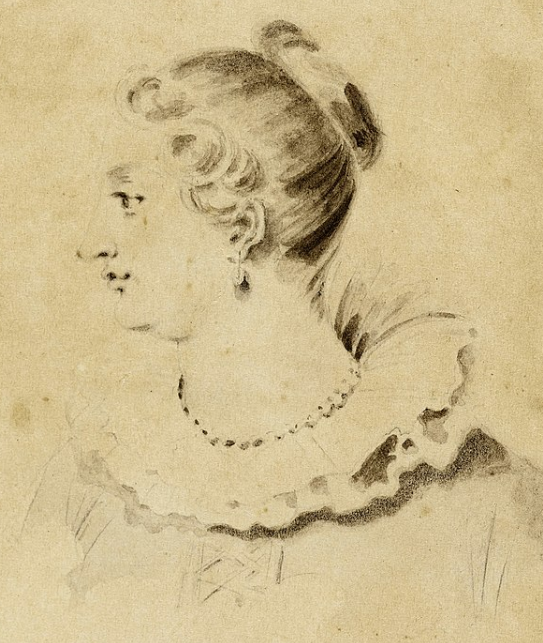
, Victor’s mother.
The young Victor and his two older brothers Abel and Eugene, went to live with their mother at 24 Rue de Clichy in 1804.
Jean Jaurès, a socialist from a French Protestant family of doctors, might have saved hundreds of thousands of lives by getting the French government to pull back from entering the First World War. But he was assassinated on 31 July 1914, three days before war was declared. Without his determined internationalism the other Socialist and trade union leaders collapsed into the ‘Holy Union’ against Germany.
In 1902 Jaurès was one of the founders of the French Socialist Party. In 1904 he set up the socialist daily paper, L’Humanité, that he edited until two bullets were fired into his back while he was having supper in the café on the corner of the Rue du Croissant and the Rue Montmartre, just up the street from its editorial office.
His body was taken back to his wife that evening, at 96bis Villa de la Tour, where they had lived since 1899.
In 1905 had been the principal mover behind the formation of the French Section of Workers’ International (SFIO) – the common origins of today’s French Socialist and Communist Parties.
Jaurès was opposed to armies used for offensive wars and believed the best defence was a people’s militia.
Speech by Jean Jaurès on May 25, 1913, during the demonstration against the three-year law at the Pré-Saint-Gervais (to the right of Jaurès, seated, profile: Pierre Renaudel, one of the founders of the French Socialist Party. On the left, with the white beard: Arthur Groussier).
In 1914 the SFIO won 17% of the vote, and became France’s second biggest party.
Two weeks before he was murdered, the SFIO’s emergency congress called for a general strike to stop the war and preserve peace. He believed that war could be prevented if a general strike took place in France and was followed by similar action in Germany, Britain and Austria.
Five days before his murder Jaurès told a meeting in Lyon that ‘War is brought by capitalism, like the clouds bring storms’. Jaurès moved a motion of censure against the Radical government for provoking war by sending a minister to Russia.
Rosa Luxemburg and Jean Jaurès spoke at a mass anti-war meeting in Brussels on 19 July 1914
Right-wing papers like ‘L’Echo de Paris’ had already screamed:
‘On the verge of war, if a general put Jaurès against a wall and gave him the lead he’s missing in his brain, wouldn’t you say he was doing his basic duty?’
This was not the first time Jaurès had been publicly vilified. He had attracted a barrelfull of vitriol in the Dreyfus Affair that split France for a decade from 1895. Alfred Dreyfus was a Jewish army officer who was falsely charged with giving intelligence to the Germans. He was court-martialed and sentenced to transportation for life to a prison island in 1894.
On one side was a massive coalition of the supporters of law and order, the French army (right or wrong), French nationalists and anti-semites (in a Catholic country where priests with considerable influence commonly preached that the Jewish people was partly responsible for Christ’s crucifixion). On the other were a handful of campaigners, mainly socialists and left republicans skeptical of the army and France’s imperial and militaristic ambitions.
In Sirat’s Daily Mail-type image, Jaurès has a bottle of Eau de (not vie, but) Courage in his pocket. His waistcoat buttons are made of skulls. The torch in his right hand has just set fire to Paris (Notre Dame and the National Assembly building are blazing). At his feet is a broken sabre of the National Guard. The cheese to attract the rat voters is marked ‘Bloc’ – short for the Bloc de Gauche where socialists and left republicans agreed not to contest each other in the second round of any election.
In 1898 postcards showing Jaurès as a wild-eyed red drunken revolutionary did the rounds.
He himself had taken a few years before he was convinced by Émile Zola and others of Dreyfus’ total innocence, but once persuaded, Jaurès played a big part in getting Dreyfus freed. In 1897 he was physically assaulted in the National Assembly for denouncing the travesty of justice.
In 1898 he became a leading contributor to the radical republican newspaper, La Petite République at 111 Rue Reaumur. He soon added the adjective Socialiste to its title. From then until he founded l’Humanité in 1904 it was the main socialist newspaper. It was in its pages that he detailed the proof of Dreyfus’ innocence.
Walking from where Jaurès lived near the Trocadero to the murder scene at the Café à la Chope du Croissanton the rue du Montmartre on a summer’s day takes 45 minutes. Jaurès himself will have usually gone by the new metro or by a horse-pulled bus.
On 31 July 1914, however, he had gone there direct from the National Assembly, where he had failed to persuade the Republican ministers to step back from war. He was going to work on an article for L’Humanité that would call on the French working class to stop it instead. So he decided to have a bite to eat before going to the paper’s office at 16 rue du Croissant.
Jaurès’ assassination is marked by one of the very few plaques for 20th century left-wingers displayed in 21st century Paris.
What happened to the appropriately-named Raoul Villain, the
29-year-old nationalist who murdered Jaurès and silenced the last person
capable of resisting the descent into war?
Villain, a member of the Youth Friends of Alsace-Lorraine (under German control since 1871) ran away from the scene but was stopped and arrested. He immediately told the police he was proud of what he had done and was imprisoned awaiting trial. Throughout the war he repeatedly asked for his trial to be postponed. It finally opened on March 24 1919, four months after the war was ‘won’.
The judge told him: ‘Villain, you’re a patriot. You just didn’t think about the consequences of your act’. Five days later, by 11 votes to 1 the patriotic jury acquitted him. One juror said: ‘If Jaurès, the opponent of the war, had been around, France would not have been able to win the war’.
The judge then ordered Jaurès’ widow to pay the costs of the trial. Three weeks later, on April 6 1919, a 100,000-strong socialist protest demonstration down the Avenue Henri Martin where Jaurès’ widow lived at no 72 , was attacked by the police, and two demonstrators killed.
Villain fled France, and finally experienced the ultimate, ironic fate. He was living in Ibiza when the Spanish Civil War broke out in 1936. Franco bombed the town and Villain was shot as a spy by Spanish anarchists without their knowing his real crime against humanity.
Locations
15 rue Madame. Jaurès lived here when he first came to Paris, staying from 1893 to 1899.
111 rue Réaumur. Offices of the La Petite république, socialist republican paper co-edited by Jaurès, who was only convinced to support Dreyfus in 1898.
33 quai d’ Orsay. National Assembly. Jaurès was assaulted on 22 January 1898 when he defended Dreyfus in the Chamber of Deputies
138- 142 Rue Montmartre. The first number of l’Humanité was printed at this address. Its first offices were at 110 Rue de Richelieu.
8 Boulevard de Strasbourg. The Unification congress of the Socialist Party (SFIO) took place in the Globe Room of the Favre here on 23, 24 and 25 April 1905, when it claimed 35,000 members. Jaurès (PSF) brought together Jules Guesde (PS de France) and Jean Allemane (POSR)
3 rue du Château d’Eau. Bourse du Travail where a physical fight broke out on August 3 1908 witnessed by Jaurès and Lafargue, giving their support to the failed General Strike call for that day called by the CGT. This call followed the police murders of four strikers and wounding of another ten at Villeneuve St Georges on May 28 and June 2 and then four new murders by the army in suppressing a solidarity demonstration on 30 July.
34 Boulevard de Courcelles. Spanish Embassy. Jaurès was among the half a million demonstrators who surrounded the embassy on 17 October 1909 in protest against the execution of the libertarian Francisco Ferrer for allegedly being responsible for a General Strike in Spain.
77 Boulevard Arago. The corner of the Santé prison was used for public guillotining from 1899. On 2 July 1910 Jaurès was one of the protestors there against an execution of a pimp there.
Place du Panthéon. The remains of Jean Jaurès were transferred to the Panthéon on 23 November 1924. 100,000 people followed the cortege.
Elected General Secretary of the CGT in 1909 as a revolutioniary syndicalist, he held the post until 1947. He opposed strike action against the First World War and led the opposition to the Communists in 1921 and in 1948 created the CGT-FO trade union of which he became president.
Living in France from the age of 10, the Jewish Henri Krasucki survived Buchenwald (unlike his Polish Communist parents) and became General Secretary of the CGT from 1982 to 1992.
Communism • Historian • Resistance • Anti-Communism
A resistant at 16 and then at 19 a member of the Communist Party, she moved to the right after 1956 and became the major anti-communist historian of the French Communist Party
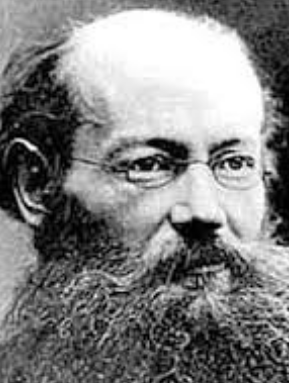
An aristocrat by birth, he became an influential anarchist. In the 1890s he synthesised Bakunin and Proudhon. His influential journals, le Révolté and La Révolte were published in Paris from 1885.
Locations
140 Rue Mouffetard. Editorial offices and printworks of Kropotkin’s le Révolté, whose presses were seized in on May 1 1890, and of la Révolte which succeeded it.