Germaine Poinso-Chapuis, a Christian-Democrat deputy for the Bouches-du-Rhone from 1946 to 1951 became the first French woman to become a full minister in the 1948 Robert Schuman government.
Germaine Poinso-Chapuis
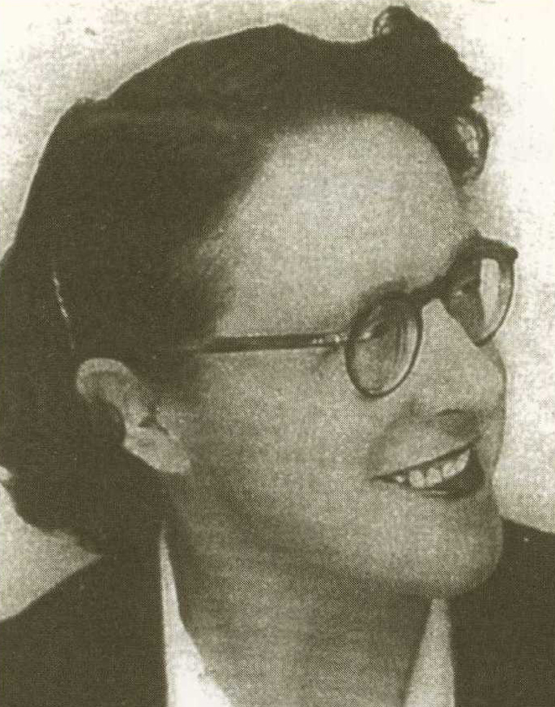

Germaine Poinso-Chapuis, a Christian-Democrat deputy for the Bouches-du-Rhone from 1946 to 1951 became the first French woman to become a full minister in the 1948 Robert Schuman government.

A leading revolutionary syndicalist, organiser and advocate of the general strike. Jailed with Louise Michel in 1883 he later became an influential journalist and propagandist for worker resistance, in particular for the general strike and direct action.
Pouget was, however, also anti-semitic, calling Dreyfus a ‘rich yid’.
In 1889 Pouget founded the anarchist weekly, Le Père Peinard. This was effective in denouncing contemporary capitalism, the military and the clergy. It advocated direct action to change the system. It became one of the principle targets of the 1893 lois scélérates, a series of laws making it illegal to support ‘propaganda by the deed‘ in the press and encouraging spies to inform on the activities of anarchist groups.
A leading left activist, Robert Louzon said that after finding Pouget’s paper at a newspaper kiosk he found Le Père Peinard ideas matched his own. In 1906, then an engineer with a good income, he loaned the CGT enough money to buy its headquarters in the Rue de la Grange-aux-Belles. When his employer, the Paris Gas company found out, Louzon was sacked on the spot.
In 1924 Louzon worked with Monatte to found the Révolution prolétarienne. Later in life, Louzon launched the first daily Communist paper in the Arabic language.
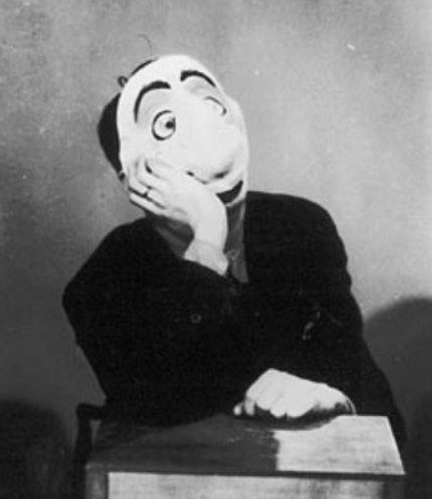
Surrealist, briefly Communist, film director and major 20th century poet, he opposed of the forces of law and order in 1968 and supported Angela Davis in 1970.
A member of the Surrealist Group from 1926 to 1929, he became increasinglly interest in film-making with the introduction of sound. For four years from 1932 to 1936 he was the principal organiser of the theatre group called October.
He lived in Rue Vaugirard as a child and went to the primary school next door. in 1907.

Proudhon was the major influence on the core beliefs of French left in the 19th and early 20th centuries. His ideas can be seen to have shaped anarchists, socialists, utopian communists, cooperatists and revolutionary syndicalists and created a backcloth of sympathy and support for a democracy involving working people that kept attracting artists and writers to the left throughout the century following his first major work ‘What is Property’ in 1840.
When Marx was in Paris in 1843-1845 Proudhon discussed politics with him frequently in a bar in the Rue Coquillière and at their respective homes in the Rue Vaneau and 36 Rue Mazarine. Proudhon later moved to 70 rue Mazarine where he was living in 1847 and in the revolutionary year 1848.
In 1849 he was jailed in St Pélagie prison, where he was kept until 1852. He was out on parole at the moment of Louis-Napoleon’s 2 December 1851 coup d’etat. He had to inform Victor Hugo regretfully that as a result he was not in a position at that moment to defend the Republic.


