Arrondissement 1
Rue de l’Amiral de Coligny

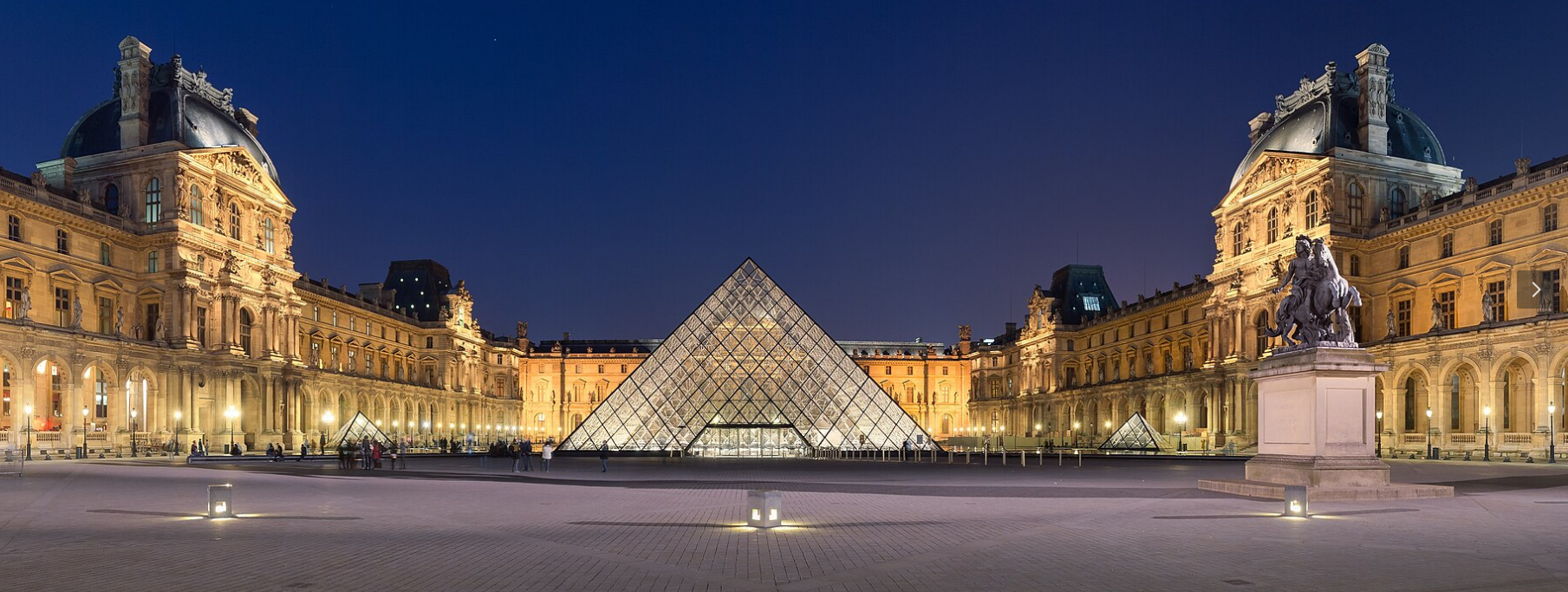
The Louvre Palace was built under Philip II in the late 12th to 13th century. By the 16th century it had ceased to be a fortress and became the primary palace of the French monarchy. Redesigned and extended often it became the home of the royal art collection from 1682 when Louis XIV moved the court to Versailles.
The Louvre played a major symbolic and organisational role in the people’s revolutionary explosions of the 18th and 19th centuries (1789-93, 1830 and 1871). In the 20th century it became associated with Resistance to German Occupation.
During the French Revoution it became a national art museum, largely of royal and confiscated church property.
During the July 1830 Revolution it witnessed the defeat of Charles X‘s Swiss guards on July 29, when a crowd, including many Polytechnic students, stormed it using a scaffolding for repairs that covered part of the colonnade.

Louis Vaneau, one of the Ecole Polytechnique students killed in the 1830 fighting, had the Rue Vaneau renamed after him in 1870.

After the 1870 Sedan defeat and the end of the Second Empire, Gustave Courbet chaired a meeting of Parisian artists at the Louvre on September 6 1870. It set up a Commission for the Protection of the Heritage of Paris’ museums.

On March 1 1871 a hostile crowd gathered at the Louvre to shout insults at the Prussian officers who came to visit their ‘captured’ monuments after Thiers and Favre in Versaiilais had signed an ignominious armistice to end the siege of Paris.
Two weeks later the Louvre was the headquarters of the military governor of Paris at the moment when the Versaillais government attempted to seize control of the canon that were defending Paris. This coup’s failure led to the formation of the Paris Commune on March 18 1871.
The Federation of Artists, including Aimé-Jules Dalou and Jules Héreau as well as Courbet, immediately moved into the Palace. On April 17 a meeting held in the Antiquities Room of the museum (off the Place du Carrousel) elected a 47-strong Committee of the Artists’ Federation.
On 24 May 1871, when the Versaillais troops took over the Louvre Palace, a solitary woman stood in front of them. She was put against the gate of the colonnade and shot.
After the Occupation of Paris by German troops on June 14 1940, several staff at the Louvre Museum formed a collective resistance team aiming to save as many art works as possible from destruction and pillage.
Under the Occupation Parisians were forbidden to enter. Only a handful of staff were allowed in. They included Jacques Jaujard, the existing Protestant-origin head of French national museums.
He used his knowledge of the underground storage beneath the Louvre to store the first leaflets produced by the Committee of Public Safety founded by Boris Vladimirovitch Vildé, an ethnologist and linguist at the Musee de L’Homme. The journal they produced from August 1940 was called Résistance.
Vildé and six other intellectuals and academics in the Groupe du musée de l’Homme were finally denounced by a Vichy supporter and shot at Fort Mont-Valérien in Suresnes, a western Paris suburb, where between 1,000 and 4,500 resisters were executed during the Occupation.
At the Louvre the three rooms taken over by the Germans to store the art and culture seized from Jewish families didn’t provide enough space, so Jaujard and Rose Valland, a graduate student of art history, suggested they use the Jeu de Paume museum in the Tuileries gardens from October 1940. This was where Valland had volunteered since 1932.
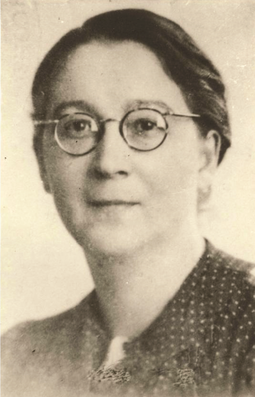
Rose Valland, who understood German, but kept that secret from them, then began working full-time alone at the Jeu de Paume, built under Napoleon III in 1861, and a gallery since 1909. While there she secretly kept notes on the over 20,000 works of art the Germans had looted and wherever possible, through talking to lorry drivers taking them onwards to railway stations, finding out where they were going to and in many cases to which individuals.
She was present when on May 3 1941 Hermann Göring made one of his 20 visits to the museum to choose paintings for his own private collection. The others were either sold through Switzerland, burned in a bonfire of ‘degenerate art’ on July 27 1942, or stored to be eventually housed in Hitler’s never-constructed Leader’s Museum in Linz.
Valland passed on information to the Resistance via Jaujard so that the trains east they were on would not be mistakenly blown up. In August 1944 this information was used to prevent the final attempts by the Germans to loot 148 crates of paintings containing in total 967 paintings, including works by Braque, Cézanne, Degas, Dufy, Gauguin, Modigliani, Picasso, Toulouse-Lautrec and Utrillo.