
Arrondissement 7
Numbers: 13, 16, 33, 68, 88, 98-100, 126
Several addresses in the very long but often narrow old road running parallel to the Seine are linked with the 12th century purchase by the University of Paris of the wide strip of land west of the Saint-Germain-des-Prés Abbey but especially with the resistance during the German occupation.
At the beginning of the 2.7 kilometre long road at No. 13 stands the gateway and courtyard of an 18th century high-flier’s mansion house that was demolished in the 1970s. It made way in 1978 for the France’s elite-forming École nationale d’administration (ENA) which, in turn from 2007 became l’Institut d’études politiques de Paris (Sciences Po).
Berty Albrecht became a militant feminist in London, where she followed Sylvia Pankhurst in the 1920s. By 1940 she was back in Paris living at No. 16 until the Armistice of June 1940. She then moved to the unoccupied zone, fell in love with Henri Frenay and became the head of a social service network that helped imprisoned resistance supporters and fighters and their families.
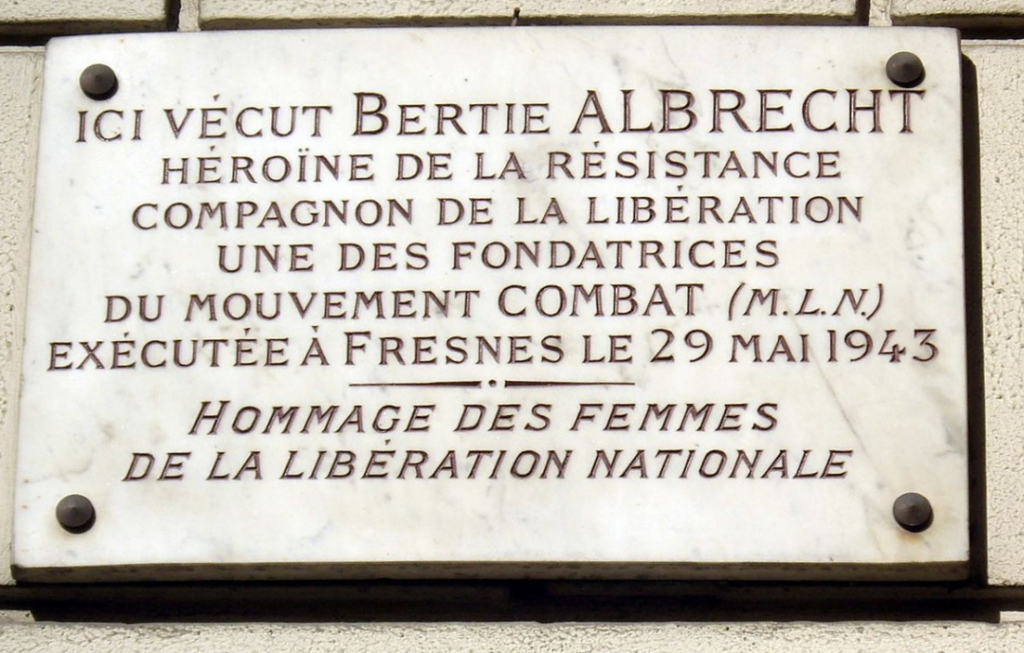
Born Berthe Wild in Marseille in 1893 in the 1930s she helped Jews and Communists escaping Nazism. Helping create the Combat resistance group she committed suicide in May 1943 after being arrested and tortured in Lyon and then at the Fresnes prison where her remains are with others at the memorial to those who died there.
On 21 September 1943, the grandson of Louis Pasteur, Dr Joseph Louis Pasteur Vallery-Radot, Paris Chair of Medical Pathology, already forced into clandestinity, set up the Resistance National Medical Committee at No. 33 with Dr Paul Milliez, the president of the Catholic student doctors, and Claude Bouchinet an underground representative of De Gaulle. It linked about 120 young doctors and trainees, both Communist and Gaullist in a united organisation.
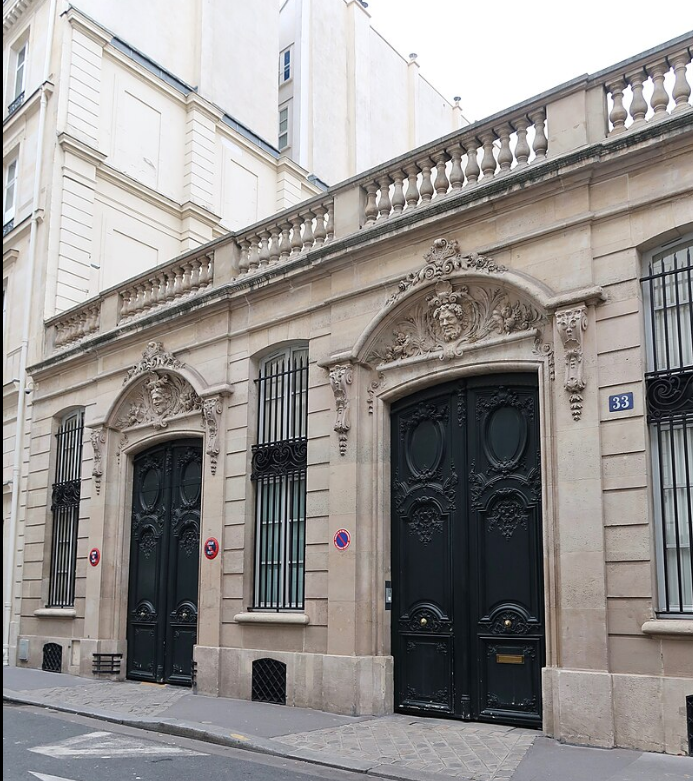
After the liberation of Paris in 1944 No. 33 served as the offices of the Artistic Recovery Commission (CRA) to restore works of art looted by the Germans. By 1950 when the CRA was closed, of the 61,233 objects recovered, 45,441 were returned to their owners or their owners’ surviving families; 12,463 were sold and 2,143 were given to French museums.
In 1941 the underground Communist Party began setting up resistance organisations to start fighting back after the invasion of Russia by Hitler in June. The two who bombed the garage at No. 68 were part of the CP’s Youth Battalion.
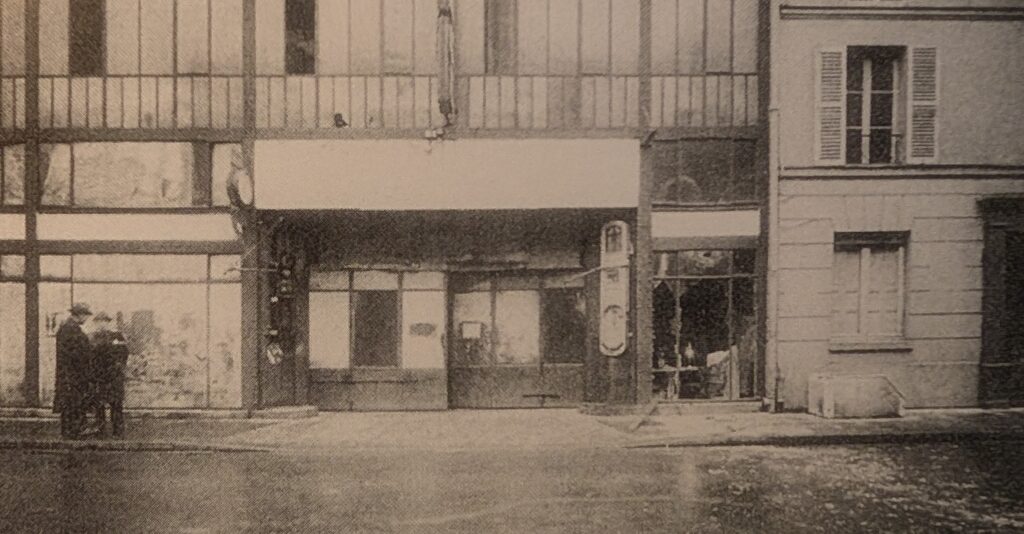
George and Pierre were among the communist Parisian resistance fighters arrested by French police in February 1941. They were tortured and then, all except Conrad Miret i Musté who died under torture in the Santé prison, were tried by a German court martial at the Maison de la Chimie in Rue Saint-Dominique from April 7 to 14 1942 charged with 35 attacks on the occupying army. Twenty-three of them were shot at the Mont-Valérien Fort on April 17. Simone Schloss, a 21 year old French-Polish Jew was guillotined in Cologne on July 17, while Marie-Thérèse Lefebvre and the fifteen year-old André Kirschen were sentenced to ten years imprisonment.
At No. 88 Philippe Viannay and Françoise de Rivière printed the false stamps used to distribute the clandestine resistance paper Défense de la France which, by January 1944, had the largest underground circulation of some 450,000 per issue.
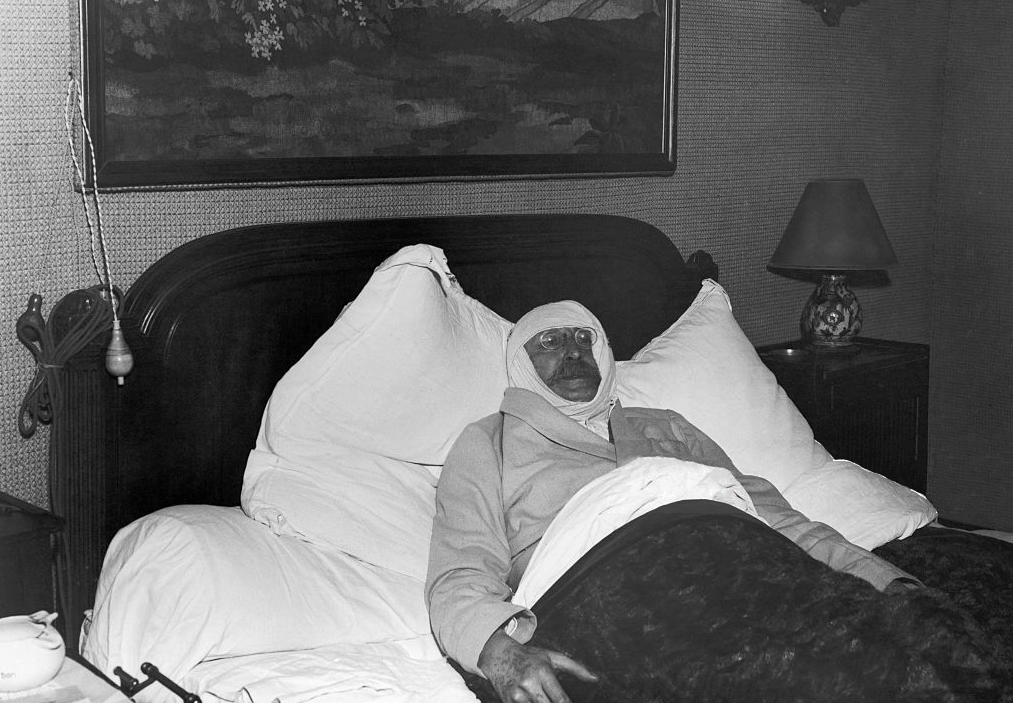
In freezing weather on February 13 1936, just two months before his election as leader of the Popular Front, Léon Blum was viciously attacked in a car stopped by French fascists and royalists outside No. 100, crying ‘hang him, string him up’. Two policemen failed to stop the attack which was then broken up by building workers from No. 98 where they were working. Blum was hospitalised but, arguing that his attackers had had their minds poisoned by the anti-Semetic extreme right press, refused to make an official complaint.
The most famous address in the road, however, is the Palais Bourbon, today’s National Assembly since 1879 at No. 126.
The Chamber of Deputies was where the 18-year-old Russian Jewish immigrant Fernand Zalkinow, Robert Peltier (20), Roger Hanlet (19), the student Christian Rizo (19), Pierre Milan (17), Acher Semahya (26) and the Haitian student Tony Bloncourt members of the Youth Battalion of the Communist resistance were tried for 17 resistance actions. Bloncourt’s began with the first patriotic demonstration on November 11 1940.
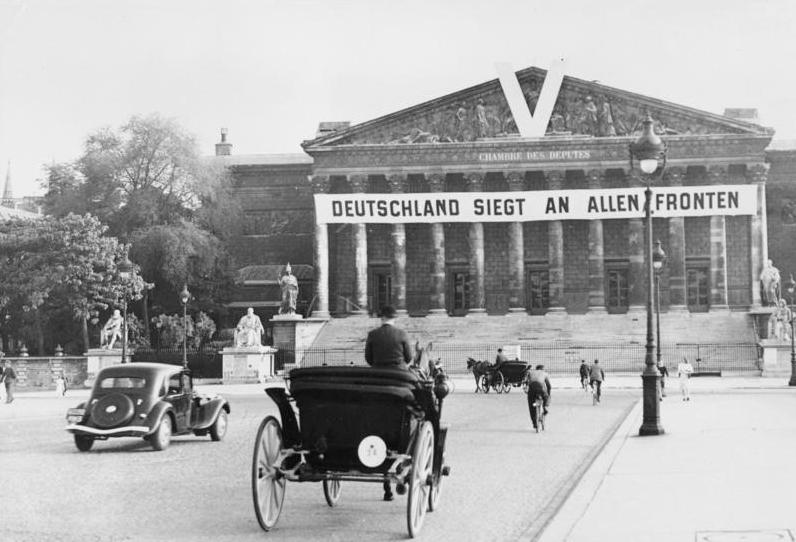
Subsequently the two sisters and mother of Fernand Zalkinow were deported and murdered in Nazi concentration camps, while the father was shot as a hostage on August 11 1942, in the same clearing as his son had been, under a German order that parents of ‘terrorists’ should be killed in reprisal for their children’s actions.


