Fourth Republic

Cold war in France, Trade union split, Indo-Chinese war, European Economic Community, Suez, Algerian War – in progress

Cold war in France, Trade union split, Indo-Chinese war, European Economic Community, Suez, Algerian War – in progress
Numbers: 47, 127, 163
Hospitals often have strange stories to tell. The former gunpowder factory and prison that became the Salpêtrière hospital at No. 47 was where Joseph Ignace Guillotin practised his ‘more humane’ method of execution (than hanging or shooting) on the hospital’s dead bodies on April 15 1792.

Six months after Dr Guillotin was there, 35 women common prisoners held there were murdered in the panic of the September massacres to which the revolutionary Jacobin leaders turned a blind eye.
A centre for neurological diseases, this was where André Breton was treated by Dr Joseph Babinski in 1917.
Much further along the Boulevard, on March 25 1920 the future Ho Chi Minh attended an anti-colonial conference based on Lenin’s support for national independence at No. 127.
In the interwar years the Communist Party organised many meetings at the Trade Union Centre at No. 163 of groups such as the Women’s Union, the Humanity Defence Committee and the Red Campers.
The Hôpital de la Pitié-Salpêtrière at No. 47 was requisitioned by the Germans in 1940, and was where they used to bring tortured resistance fighters or their dead bodies.
The statue of the neurologist Jean-Martin Charcot erected outside the hospital on December 4 1898 was melted down for guns in 1942 to help the German war effort, as were 100 others under the law of October 11 1941 passed by the Vichy Government.
The Boulevard was the route taken by the 9th company of Leclerc’s 2nd battalion on its way into Paris on 24 August 1944. Among the troops were 130 Spanish republicans whose armoured vehicles had been given names like Guadalajara, Teruel and Guernica.
Much later, this was where France’s first artificial heart was implanted in 1986, nearly twenty years after the first heart transplant in France took place there.
Two years earlier, in 1984, the hospital saw the deaths of two very different contributors to Paris’ left culture: Michel Foucault and Pierre Frank.
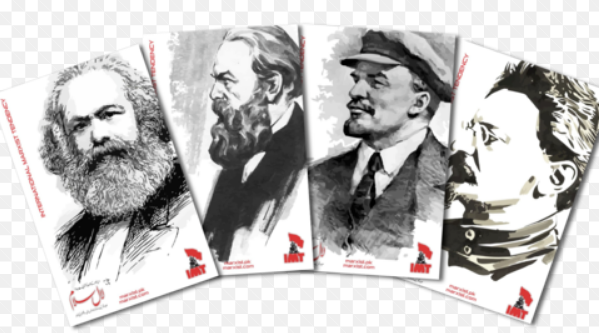

What is shared between those who define themselves or are defined by others as ‘communist’? And how may ‘Communism’ be distinguished both from French anarchism and French socialism, with which it shared much common history and ground?

The 1795 Paris revolutionary ‘Manifesto of Equals’ inspired by François-Noel Babeuf and rescued from oblivion by Philippe Buonarroti (1761-1837) summarised what remained (and remains) common to nearly all those who described themselves as communist across the following two hundred and some years:
‘We need not only that equality of rights written into the Declaration of the Rights of Man and Citizen; we want it in our midst, under the roofs of our houses… We lean towards something more sublime and more just: the common good or the community of property! No more individual property in land: the land belongs to no one. We demand, we want, the common enjoyment of the fruits of the land: the fruits belong to all.
We declare that we can no longer put up with the fact that the great majority work and sweat for the smallest of minorities. Long enough, and for too long, less than a million individuals have disposed of that which belongs to 20 million of their kind, their equals.
Let it at last end, this great scandal that our descendants will never believe existed! Disappear at last, revolting distinctions between rich and poor, great and small, masters and servants, rulers and ruled.’
After agreeing to this general statement of belief, communists had much more to disagree with each other upon.
We have divided the considerable history of Communism in France into five periods:


