From one war to another

Anarchism, Socialism, Paris Exhibition, Dreyfus, Revolutionary syndicalism – in progress


Anarchism, Socialism, Paris Exhibition, Dreyfus, Revolutionary syndicalism – in progress
Numbers: 6, 9, 25
In 1817 under the Restoration the Rue Ferrand (after the landowner on which it was built in 1777) was renamed the Rue Laval after the 71-year-old aristocrat Abbess of Montmartre (Marie-Louise de Laval-Montmorency) executed on July 24 1794. In 1887 it took its present name to honour the composer and music teacher Victor Massé who had died three years earlier.
In the 1920s and 1930s, No. 6 housed the People’s Bookshop (Librairie Populaire) run by the Communist Party. You could buy not just books and pamphlets there, but also busts of great people, badges, red flags and also red liberty caps (Phrygian bonnets).

No. 9 was a key address for French socialists. On April 11 1918 Léon Blum, Jean Longuet and Paul Faure published the first daily issue of the evening paper, Le Populaire, from there.

After the majority of the French Socialists voted in 1920 to affiliate to the Communist Third International, the Populaire became the principal offices of the SFIO Socialist Party.
Close to Montmartre several artists had workshops and/or lived in the road. Edouard Manet had studied at Thomas Couture’s workshop at No. 23 in 1850. Pierre Bonnard lived at No. 18 in 1890. During his second stay in Paris Vincent van Gogh lived with his brother at No. 25 in March 1886. Berthe Weill had a gallery at that address too, where in 1901 she held a joint exhibition of paintings by André Derain, Maurice de Vlaminck and Henri Matisse. This was also where Diego Rivera opened his first solo exhibition on April 21 1914.
Maurice Ravel also lived in the street between 1880 and 1886 at No. 29, while Edgar Degas lived at No 37 from 1890 to 1912 with his workshop in the attic.
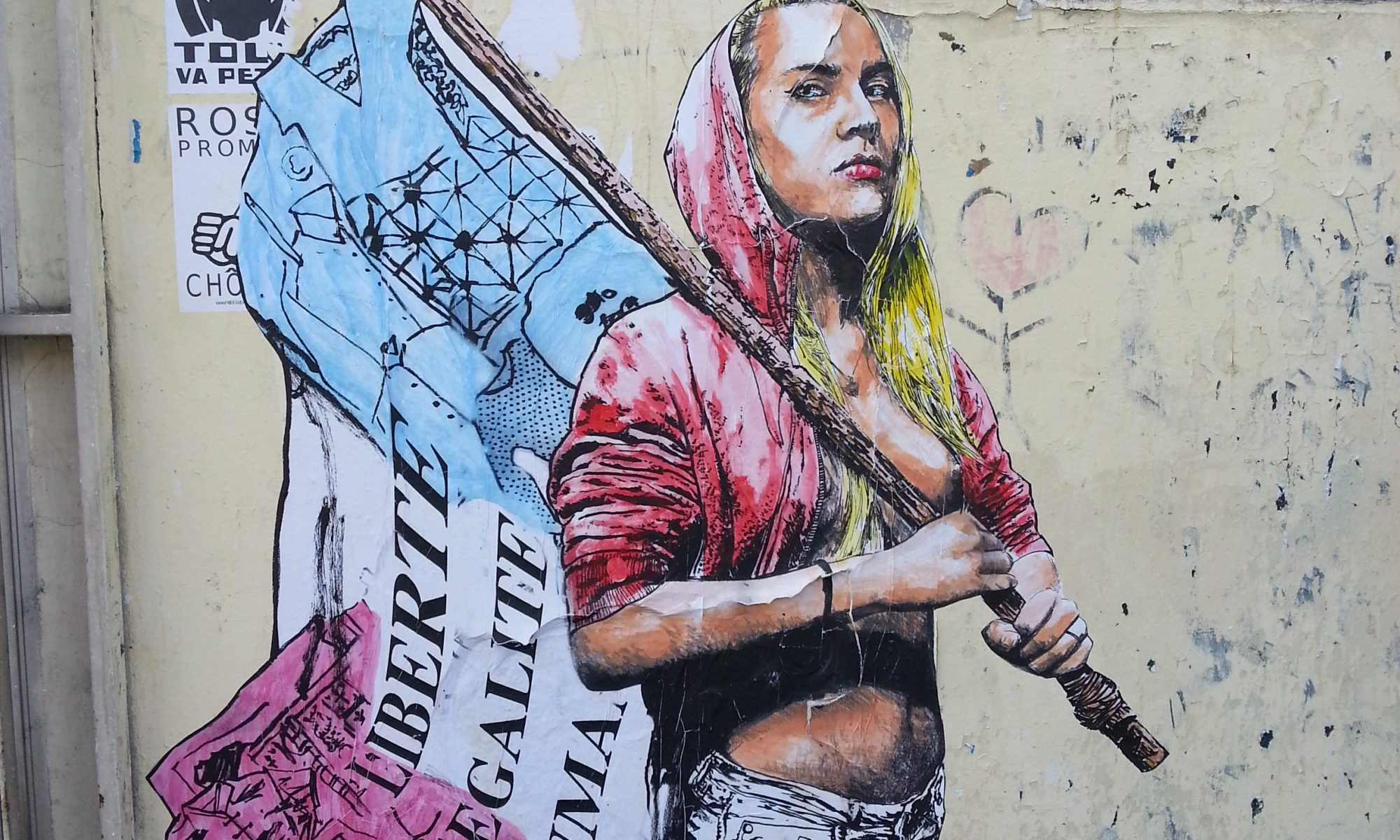

References to include: Eugène Delacroix


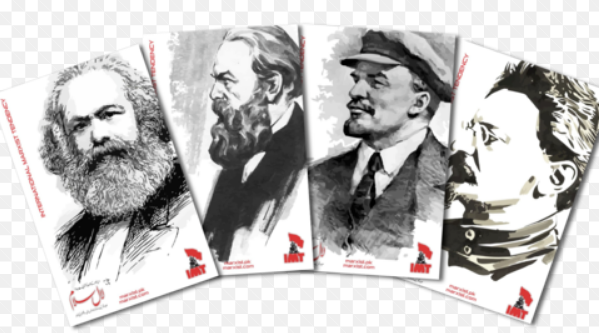

What is shared between those who define themselves or are defined by others as ‘communist’? And how may ‘Communism’ be distinguished both from French anarchism and French socialism, with which it shared much common history and ground?

The 1795 Paris revolutionary ‘Manifesto of Equals’ inspired by François-Noel Babeuf and rescued from oblivion by Philippe Buonarroti (1761-1837) summarised what remained (and remains) common to nearly all those who described themselves as communist across the following two hundred and some years:
‘We need not only that equality of rights written into the Declaration of the Rights of Man and Citizen; we want it in our midst, under the roofs of our houses… We lean towards something more sublime and more just: the common good or the community of property! No more individual property in land: the land belongs to no one. We demand, we want, the common enjoyment of the fruits of the land: the fruits belong to all.
We declare that we can no longer put up with the fact that the great majority work and sweat for the smallest of minorities. Long enough, and for too long, less than a million individuals have disposed of that which belongs to 20 million of their kind, their equals.
Let it at last end, this great scandal that our descendants will never believe existed! Disappear at last, revolting distinctions between rich and poor, great and small, masters and servants, rulers and ruled.’
After agreeing to this general statement of belief, communists had much more to disagree with each other upon.
We have divided the considerable history of Communism in France into five periods:


