Rise of the Communist Party

Nationalism, Reparations, Imperialism, Socialist split, Communist Party, Class against Class to Popular Front – in progress


Nationalism, Reparations, Imperialism, Socialist split, Communist Party, Class against Class to Popular Front – in progress
Number 3

Albert Treint, one of the first leaders of the French Communists, was living here in Belleville with his wife and son when he was expelled from the PCF (French Communist Party) for supporting the Left Opposition to Stalin on 31 January 1928.
Albert Treint, one of the first leaders of the French Communists, was living here in Belleville with his wife and son when he was expelled from the PCF (French Communist Party) for supporting the Left Opposition to Stalin on 31 January 1928.
Number 40-42, 51

It’s a big haul walking up from the boulevard de Belleville to the Boys’ Elementary School (now mixed) where Albert Treint taught from 1919 to September 1921. He was then dismissed for his political activities as a leader of the new French Communist Party.
His victimisation was revoked in 1936 when Jean Zay became Minister of Education in the Popular Front government. Three years later, however, Treint was dismissed again when the Daladier government passed a law interning all those considered a threat to the security of the state.

Hazan (IOP) quotes the Communard historian Prosper-Olivier Lissagaray as writing that the last of the 1871 Commune barricades to hold out on May 28 1871 was across the Rue Ramponeau at numbers 40-42, rising above the Rue de Belleville (then Rue de Paris), and within a kilometre of the Père-Lachaise cemetery where the last Communards were gunned down.

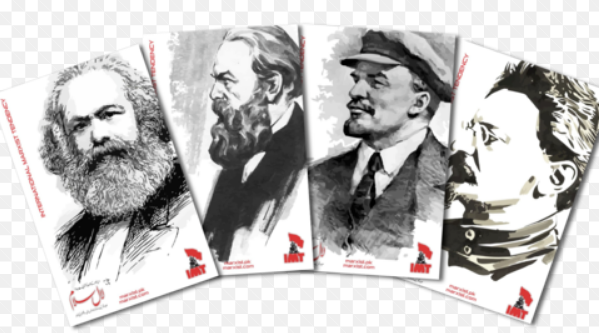

What is shared between those who define themselves or are defined by others as ‘communist’? And how may ‘Communism’ be distinguished both from French anarchism and French socialism, with which it shared much common history and ground?

The 1795 Paris revolutionary ‘Manifesto of Equals’ inspired by François-Noel Babeuf and rescued from oblivion by Philippe Buonarroti (1761-1837) summarised what remained (and remains) common to nearly all those who described themselves as communist across the following two hundred and some years:
‘We need not only that equality of rights written into the Declaration of the Rights of Man and Citizen; we want it in our midst, under the roofs of our houses… We lean towards something more sublime and more just: the common good or the community of property! No more individual property in land: the land belongs to no one. We demand, we want, the common enjoyment of the fruits of the land: the fruits belong to all.
We declare that we can no longer put up with the fact that the great majority work and sweat for the smallest of minorities. Long enough, and for too long, less than a million individuals have disposed of that which belongs to 20 million of their kind, their equals.
Let it at last end, this great scandal that our descendants will never believe existed! Disappear at last, revolting distinctions between rich and poor, great and small, masters and servants, rulers and ruled.’
After agreeing to this general statement of belief, communists had much more to disagree with each other upon.
We have divided the considerable history of Communism in France into five periods:


