Fourth Republic

Cold war in France, Trade union split, Indo-Chinese war, European Economic Community, Suez, Algerian War – in progress

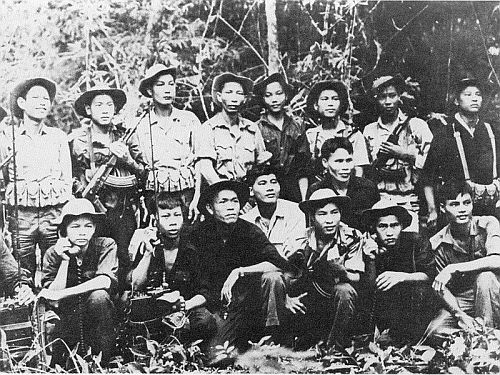
Cold war in France, Trade union split, Indo-Chinese war, European Economic Community, Suez, Algerian War – in progress
Number: 45,

The Rue d’Ulm, going south from the Panthéon, was opened on January 6 1807. It was named after the crushing defeat of the Austrian army by Napoléon at the Battle of Ulm between October 15 and 20 1805.
It is largely known because since November 4 1847 it hosted France’s most prestigious higher education selective university, the École normale supérieure (ENS) at No. 45. This special institution was initiated by Napoléon on March 17 1808 when he created a ‘standard boarding school’ (Pensionnat normal) within Paris university to train arts and science teachers. The students had to follow military rules and wear uniforms and were chosen from those who performed best in the secondary schools.
Louis Pasteur‘s laboratory was based there from 1864 to 1888, and was where he discovered a vaccine for rabies. The photgraph above shows the ENS in 1905.
From 1888 to 1926 the socialist Lucien Herr was the director of the ENS general library, with one of the students he influenced being Léon Blum. Herr also convinced Jaures there in 1898 of the innocence of Captain Dreyfus.
Students who studied at ENS included Maurice Halbwachs (who died at Buchenwald), Marc Bloch (executed by the Gestapo on June 16 1944), Raymond Aron, Jean-Paul Sartre, Simone Weil, Georges Pompidou, Aimé Césaire, and Alain Touraine.
Perhaps the ENS’ most well-known left resident was Louis Althusser. He entered the ENS in 1945. Having passed the final exams with the highest marks, he began to work there from 1948, living in a staff flat provided by the ENS. This was where in 1980 in a fit of manic depression Althusser strangled his partner of 54 years.
In the aftermath of 1968 the Maoist group, La Gauche Prolétarienne (The Proletarian Left), held regular meetings in the Cavaillès lecture theatre. Among their leaders was Benny Levy. On October 21 1970 they used the ENS building to make Molotov cocktails.
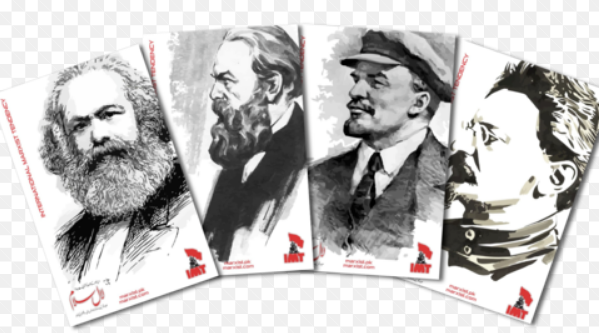

What is shared between those who define themselves or are defined by others as ‘communist’? And how may ‘Communism’ be distinguished both from French anarchism and French socialism, with which it shared much common history and ground?

The 1795 Paris revolutionary ‘Manifesto of Equals’ inspired by François-Noel Babeuf and rescued from oblivion by Philippe Buonarroti (1761-1837) summarised what remained (and remains) common to nearly all those who described themselves as communist across the following two hundred and some years:
‘We need not only that equality of rights written into the Declaration of the Rights of Man and Citizen; we want it in our midst, under the roofs of our houses… We lean towards something more sublime and more just: the common good or the community of property! No more individual property in land: the land belongs to no one. We demand, we want, the common enjoyment of the fruits of the land: the fruits belong to all.
We declare that we can no longer put up with the fact that the great majority work and sweat for the smallest of minorities. Long enough, and for too long, less than a million individuals have disposed of that which belongs to 20 million of their kind, their equals.
Let it at last end, this great scandal that our descendants will never believe existed! Disappear at last, revolting distinctions between rich and poor, great and small, masters and servants, rulers and ruled.’
After agreeing to this general statement of belief, communists had much more to disagree with each other upon.
We have divided the considerable history of Communism in France into five periods:

Those referenced will include 20th century leftist writers (novelists, poets, song-writers, philosophers such as: Aimé Césaire, Jean-Paul Sartre, Victor Serge, Ernest Hemingway, Andre Breton, Louis Aragon, Guillaume Apollinaire, Georges Brassens, Marc Bloch, Pierre Bourdieu, Louis Althusser, Andre Gorz, Daniel Bensaid, Simone de Beauvoir, Frantz Fanon, Benoite Groult, Andre Malraux as well as many 19th century republicans and socialists such as Victor Hugo, Daniel Stern, George Sand, Flora Tristan, Alphonse de Lamartine, Emile Zola, Guillaume Apollinaire, Paul Verlaine, Arthur Rimbaud, Stephane Mallarme …


