Arrondissement 14
Numbers 20, 21
It’s not a surprise that a road built under Napoleon III’s Third Empire in 1865 should be named after a successful General under Napoleon I, Honoré Théodore Maxime Gazan de la Peyrière.
Alongside the Montsouris Park, No. 20 saw Le Pavillon Montsouris (known as the Pavillon du Lac) restaurant opened in 1889. Many now well-known artists and poets hung out there before 1914, including Braque and Le Douanier Rousseau.
When Lenin left Paris for the last time (heading towards Poland) in July 1912, his comrades held a farewell meal for him and Krupskaya there. During the First World War Mata Hari (Margaretha Geertruda Zelle) the Dutch woman dancer executed as a German spy in 1917 was a regular customer. A generation later, Ionesco, Simone de Beauvoir and Sartre all also frequented the Pavillon.
The expressionist artist Marie-Thérèse Auffray (1912-1990) got involved in the Montparnasse art network in the 1930s.
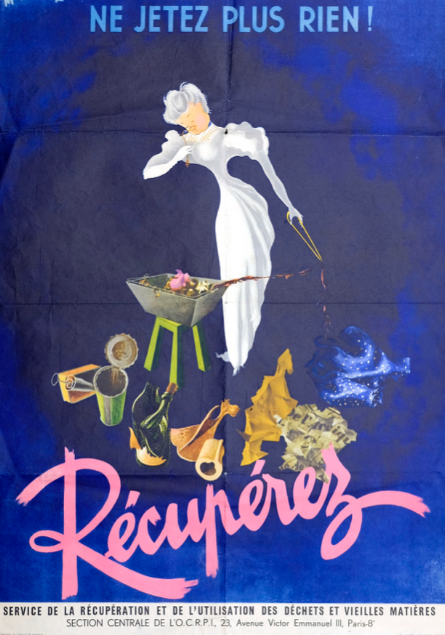
By 1940 Auffray was able to earn a living as an illustrator and poster designer. Here championing ‘Recycling’ with the instruction ‘Don’t Throw Anything Away’.
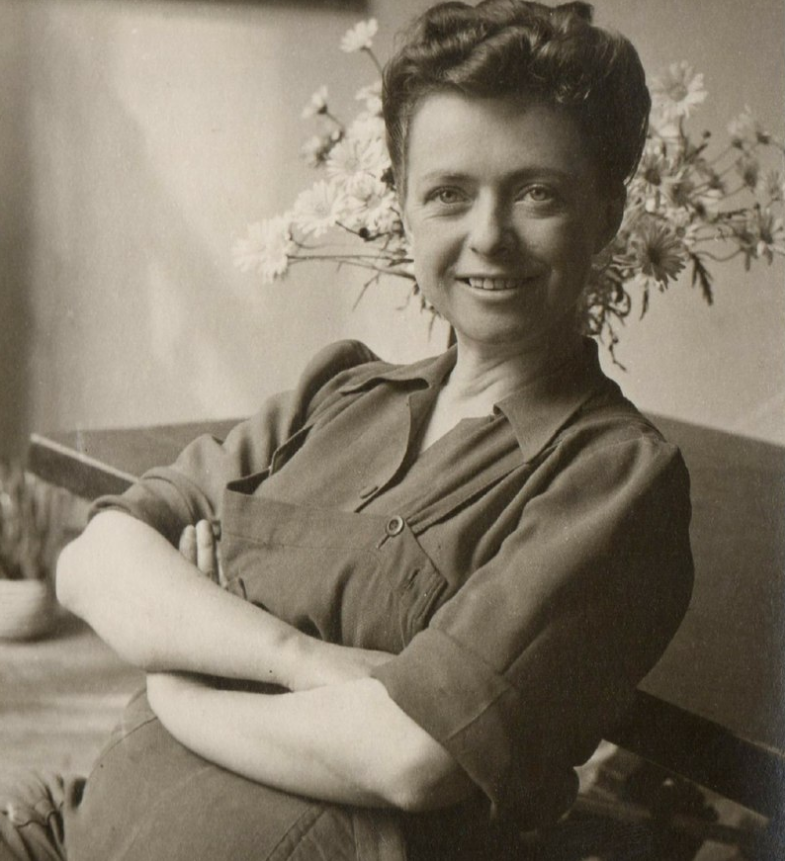
After the Germans occupied Paris Auffray joined the Ceux de la Libération resistance movement set up in the 14th arrondissement by Maurice Ripoche. As early as October 1940 its manifesto included the line: ‘French people, We will be part of the liberation’.
Ceux de la Liberation‘s first actions were to help airmen and allied soldiers escape through Spain to England. Quite soon it had thousands of supporters in the occupied northern zone. Many of these were former officers, or men who had worked in the aircraft industry and several were nationalists who had formerly been part of the far right Parti social français.
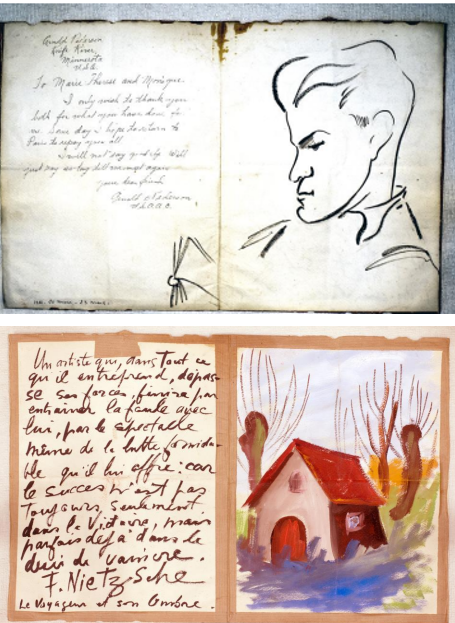
In 1941 Auffray travelled to Normandy and set up home in Echauffour with her lover, another young resistance supporter Noëlle Guillou. From there she helped keep resistance activists in Paris, taking the train with supplies of food. Auffray also helped hide resistance fighters and allied parachutists including the American pilot Arnold Pederson, whom she sketched and then hid through an overlay of a watercolour and a text by Friedrich Nietzsche.
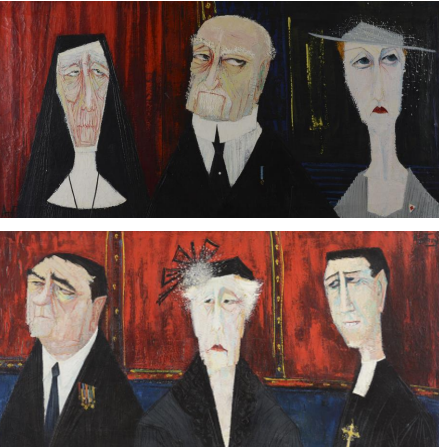
After the war Auffray returned to Paris where her paintings were included in the Galerie Drouant-David exhibition called Les grands peintres contemporains au service des prisonniers (Great contemporary painters serving the prisoners of war). She left Rue Gazan in 1970 after coming under attack for her open lesbianism. Her reply these two paintings called ‘Judges‘. In August 2019 on the 75th anniversary of the Liberation of Paris a 14th arrondissement garden famous for its Japenese cherry trees, was named after her.