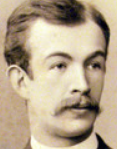
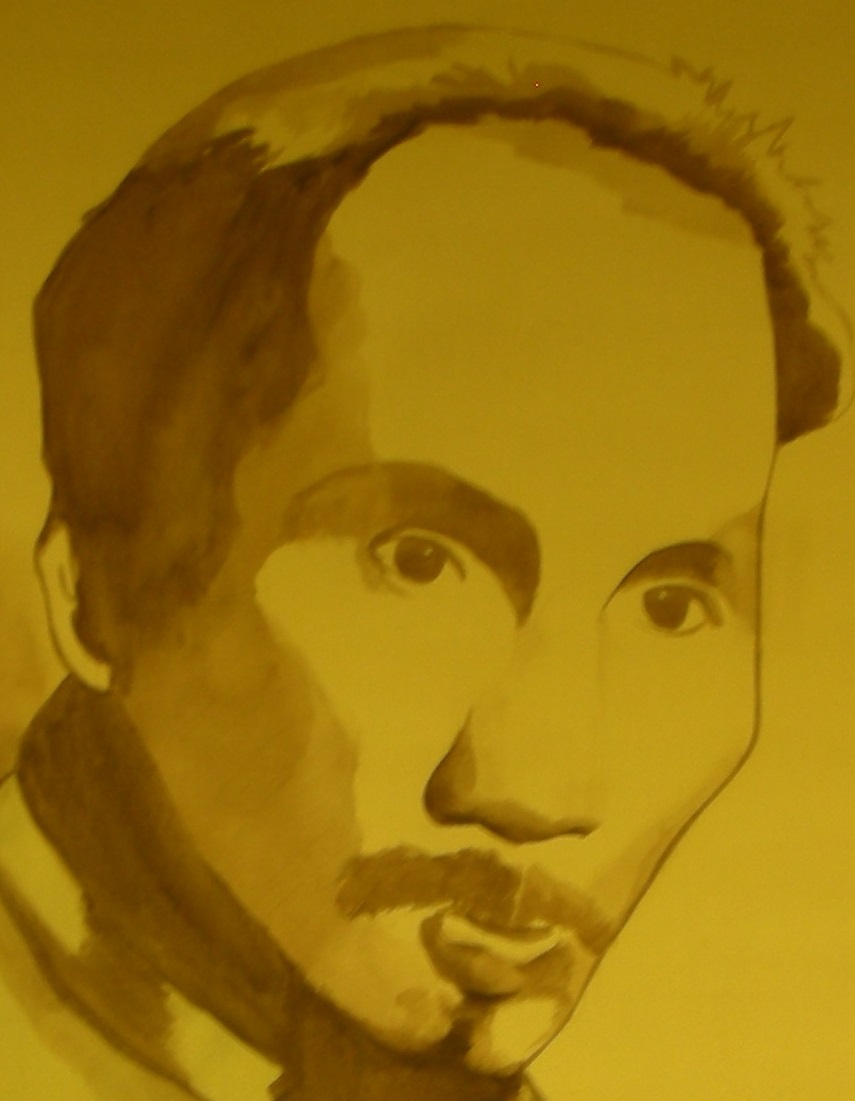
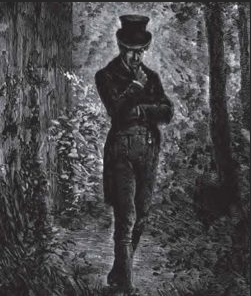
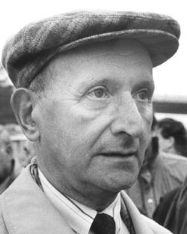
Son of a Spanish migrant Robert Barcia was a leader of a Trotskyist sect that eventually became Lutte Ouvrière.
Barcia was born in a Paris working-class family, with a leftist Spanish father. At the age of fourteen he joined the Communist Youth in April 1943 when Paris was under the German Occupation.
In September 1943 he was jailed by the French police in the Santé prison for possession of illegal leaflets. In the five months he spent in jail before being released because he was still under 16, he developed his political education copying out the Communist Manifesto by hand .
The parents of one of his fellow prisoners put him in touch when he got out with the Communist Group, the dozen or so Trotskyists led by David Korner (Barta). Korner had refused to unite with the other small French Trotskyist groups because he believed they had made concessions to nationalism.
In September 1944 a comrade from Barta’s group, Mathieu Bucholz, was murdered by Communist Party members to stop him influencing other young communists. This murder made a deep impression on Barcia, who then joined Barta’s group and adopted the pseudonym Hardy.
Between spells in a sanatorium for his tuberculosis, in April 1947 Barcia and other Union Communiste(Trotkyste) members actively supported their comrade, Pierre Bois, [1922-2002]who led the 1947 strike at Renault Billancourt(577 Avenue du Général Leclerc, 92100 Boulogne-Billancourt) that forced the withdrawal of Communist ministers from the government.
The Union Communiste split in November 1949 and disappeared in the early 1950s, but Hardy and Bois kept in contact, despite Hardy spending the whole year 1952 in the Rue Quatrefages tuberculosis clinic.
In 1956 Hardy relaunched the group with the name Union Communiste Internationaliste. The Hungarian insurrection and its repression would, it believed, allow Trotskyism to win many active Communists. Their strategy was to produce regular factory bulletins. This was effectively their only activity, and unlike other Trotskyists they played little role in supporting Algerian independence. In 1962 they launched the paper Voix ouvrière (workers’ voice).
Hardy led the group for nearly 50 years, though he never appeared in public and never wrote under his own name. To earn his living he ran a company which trained commercial travellers to sell drugs to doctors.
Voix ouvrière was banned by the government in June 1968, but within a fortnight Hardy and other comrades launched a new weekly paper called Lutte ouvrière (LO – workers’ struggle). It was the first left paper to reappear after the dissolution of virtually all the left sects.
In the aftermath of 1968 LO grew rapidly and raised its public profile considerably. From 1971 it held an annual fête during the Whitsun holidays in the outskirts of Paris – a three-day open-air festival with stalls, political discussion and entertainment. And fit began to contest elections. In particular Arlette Laguiller [b 1940] was a candidate for the presidency on six occasions.
Laguiller, a bank worker who had led a strike and occupation at the Crédit Lyonnais headquartersin 1968, was the first woman to run for the presidency, standing in 1974. Her best result was in 2002 with 1,630,000 votes (5.72% of the total). In 1999 she was elected a member of the European Parliament. By the 1990s LO was distributing regular factory bulletins to over half a million workers.
But despite becoming well-known, LO remained
a small organisation. It was tightly disciplined and put very high demands on
its members, described by one critic as “soldier-monks”. For reasons of
“security” all members had pseudonyms, and they were very strongly discouraged
from having children.
Barcia died in 2009, but, in keeping with the
cult of secrecy that characterised the organisation, news of his death was not
made public till fourteen months later.
Hemingway’s only vote was for the socialist Eugene V Debs. In 1921 he moved to Paris, leaving in 1927 after his first divorce. In the 1950s he was spied upon by the FBI for supposed Communist sympathies.
Socialist and philosopher who helped persuade many leading figures to support the Dreyfus campaign
One of the best read socialists in France this chief librarian (from 1888 to 1926) at the elite École Normale Supérieure university at 45 rue d’Ulm persuaded many key figures, such as Jaurès and Blum to become socialists and then to defend Dreyfus.
He helped found L’Humanité in 1904 and joined the SFIO in 1905.
Stéphane Hessel lived in Paris from 1924 and was naturalised French in 1937.
A French and United Nations diplomat for 40 years, he was a founder of the socialist think-tank, the Jean-Moulin Club, close to Pierre Mendès France. Campaigner for the regularisation of migrant workers he joined the Russell Tribunal on Palestine in 2009 and his 2010 call for a ‘peaceful insurrection’ against liberalism sold half a million copies.
Republican, poet, dramatist and novelist of the Romantic movement, Hugo is considered to be one of the greatest French writers, but he was also a major political opponent of Napoleon III, the opportunistic nephew of Louis-Napoléon Bonaparte who had seized power himself on November 9 1799 (the 18th Brumaire of Year 8 in the revolutionary calendar) and then crowned himself Emperor in 1804.
In the 21st century Hugo remains globally famous for Notre-Dame de Paris (renamedThe Hunchback of Notre Dame by its English publisher) and for LesMisérables, a novel turned into plays, films, TV series and the French (1980) and English language (1985) musical, which is still running in London at the time of writing (2024).
Hugo’s life was a journey, both physical and political. He was not born in Paris but lived there for the two-thirds of his life when he was not in exile in the Channel Islands or Belgium. Politically he moved from being a teenage monarchist to a Napoleon Bonaparte sympathiser and finally in the second half of his 83-year-long life to becoming a republican who chose to be taken to his grave at the Panthéon in Paris in a pauper’s coffin.
Hugo’s pauper coffin was followed in a procession by 100,000 people and watched by two million lining the streets as it moved slowly towards the Panthéon on June 1 1885.
Elected a Delegate from Paris to the Second and Third Republic national assemblies in 1848 and in 1870, Victor Hugo’s larger than life politics, locations and loves were a journey that dovetailed with the history of France through most of the 19th century.
One of Hugo’s English biographers began his 700-page study describing his life as full of contradictions: ‘the militant monarchist and the revolutionary socialist; the symbol of a corrupt aristocracy and defender of the misérables; a repressor of revolts and instigator of riots‘ (Graham Robb, 1997). An American detective story writer (Cara Black, 1999) appears disappointed to find his flat in the Place des Vosges didn’t reflect his supposed politics: ‘The room captured his essence, dark and narcissistic. The only touch that could be called socialist was the heavy peasant glassware on a mahogany sideboard‘.
Calling Hugo a ‘socialist’, a ‘revolutionary’ and ‘instigator or riots’ is inaccurate. He was never a socialist, if wanting wealth and power to be distributed more equally is in anyway defined as socialism. But Hugo’s life, his two decades-long exile, his poetry and his novels ultimately helped embed France’s republican system of government in a way that involves a more or less explicit acknowledgement of the need for greater equality.
Despite having long-term relationships simultaneously with two women in addition to his wife whom he married when aged 21, and for the last thirty years of his life using vulnerable and accessible maids as well as prostitutes for sexual gratification, both his two most well-known novels feature strong women and his final novel explicitly argues for gender equality.
Hugo’s beginnings under the Directory and the Empire
Victor-Marie Hugo was born in his captain father’s then garrison town, Besançon, on February 26 1802. This was exactly nine months after the convict number 24 06 01 Hugo later assigned to Jean Valjean, his principal character in LesMisérables. Victor was not baptised, and his first name was that of his godfather, General Victor Fanneau de La Horie, who in 1800 had secured his father’s (Léopold Hugo) posting to Besançon. Marie was the name his parents had chosen if the baby had been the hoped-for girl after Victor’s mother, Sophie Trébuchet, had already had two boys.
The future novelist and poet was born into an internally combative and dysfunctional family: he was the son of a soldier eventually promoted to General under Napoleon I and of a Catholic mother who had opposed the execution of Louis XVI. His godfather was executed for plotting against Napoleon after having been hidden for months from Napoleon’s police by his lover, Victor’s mother Sophie.
Eight months after his birth Sophie left Victor and his two elder brothers with their father and returned to Paris to lobby Lahorie and Joseph Bonaparte for a still better posting (and salary)
Sophie stayed at the Hotel de Nantes in the Rue Neuve-des-Petits-Champs (now renamed the Rue Danielle Casanova) near where the now out-of-favour Lahorie was living. Refined with nobility airs and six years older than her, a relationship developed that lasted until Lahorie’s execution in 1812.
For Major Hugo, Sophie’s lobbying didn’t work out. From Besançon the out of favour career officer was transferred with his boys to Marseille then relocated to Corsica and next to the Isle of Elba. This was where Sophie eventually rejoined her husband and children to find him with a mistress and living in rough army accomodation. A month later, in November 1803, she left Elba with her three boys and three months later arrived back in Paris where she moved into 24 Rue de Clichy.
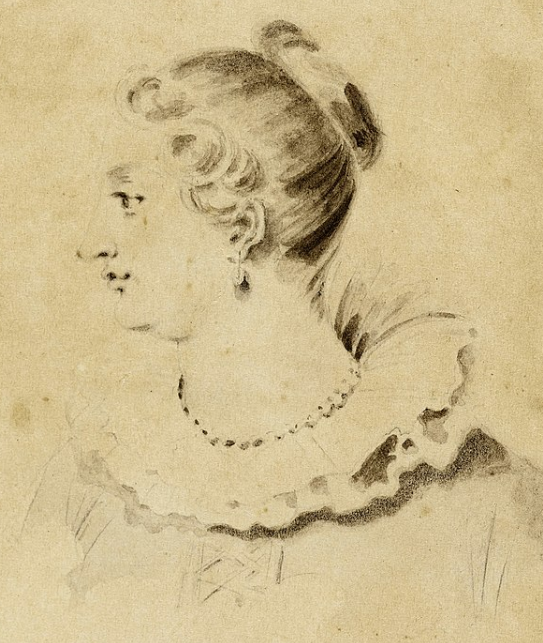
The apartment there soon became his godfather’s hiding place. In 1804 General Lahorie, sketched left, was under suspicion of supporting opponents of Napoleon’s decision to become Emperor. Lahorie moved out when rumours about him and Sophie grew, but he returned frequently, even walking the boys to school. In 1808 after Sophie moved into the Rue des Feuillantines, the old monastery’s huge garden proved an excellent hiding place for her lover, whom she called M. de La Courlandais and who taught her boys Latin until his arrest there on December 29 1810.
Within days of this arrest Sophie left Paris, taking her three boys (and two servants) on an unannounced three months journey to Madrid where, thanks to his military prowess in killing Spaniards who were resisting the French invasion, Léopold was promoted General and made Count of Siguenza by the country’s newly installed King, Joseph Bonaparte. Living in a Guadalajara palace with his mistress, Léopold wanted a divorce. This had been legalised in France under the Revolution in 1792. When Sophie received money to travel back to Paris from Lahorie she undertook the long journey home with her two younger sons, Eugène and Victor. The 13-year-old Abel remained with his father as a page to Joseph Bonaparte.
Back in Paris by April 2012 Sophie saw her lover Lahorie in the Vincennes dungeon and got him transferred to the less harsh Prison de la Force in the Rue du Roi de Sicile. She visited frequently. On June 24 1812, however, Napoleon crossed the Niemen River at Alexioten in Poland to invade Russia. Soon afterwards Sophie learned from Lahorie that a coup d’etat had been hatched by General Malet against the absent Napoleon using a forged message saying the Emperor had died in Russia on October 7, shortly after beginning his winter retreat from the burnt-down Moscow.
On October 22 1812 Malet donned his former General’s uniform and went straight to the Prison de la Force and ordered Lahorie’s release. Lahorie and others then spread the word of Napoloeon’s death and of forged order papers. A few hours later the plot collapsed when another senior officer who had received a letter actually dated by Napoleon October 7 promoting him realised Malet’s document must be a forgery. Three generals including Lahorie and 19 others were tried by a military court for treason on the morning of October 29 and shot in the afternoon on the Grenelle Plain, the open, boggy land that stretched west from the military hospital the Hôtel des Invalides.
Victor, a ten-year-old boy, had seen much more of Lahorie than he had of Leopold Hugo. His mother told him to read the poster announcing the death sentence on the traitors who included the godfather he knew as a teacher and close friend of his mother’s. He was going to witness still greater familial stress and conflict, mixed with major political changes over the next few years.
Lahorie’s death coincided with the recapture of Madrid in the Peninsula War and the subsequent restoration of the lower French grades and salaries of Army officers like Léopold Hugo who had fought in it. Hugo’s father then cut the allowances he sent to Sophie and on December 31 1813 she moved to the smaller ground-floor flat at 2 Rue des Vielles-Tuileries (now 44 Rue du Cherche-Midi).
On April 12 1814 Hugo was on the streets to cheer the arrival in Paris of the executed Louis XVI’s youngest brother, the Comte d’Artois (and future Charles X) five days after Napoléon I abdicated. A month later Sophie accompanied by Abel left Victor and Eugene in Paris to travel to Thionville, where Leopold Hugo had been made General and military commander in January. He had successfully defended the town from the Austrians until learning of Napoleon’s abdication and then pledging his allegiance to the restored Louis XVIII.
Victor’s mother had expected to be welcomed in Thionville by the newly-converted Royalist but the opposite was the case. Léopold, still living with his mistress, was looking for a divorce – first legalised on September 20 1792 under the French Revolution, before being abolished under the Restoration in 1816 and only finally re-established in 1884. General Hugo initially secured legal rights over the education of the two boys in Paris and arranged for his sister there to enrol them in a boarding school, the Cordier boarding house at 41, rue Sainte-Marguerite (now Rue Gozlin).
Huge celebrations were held in Paris on 28 February 1882 to celebrate Victor Hugo’s 80th birthday. An estimated 600,000 people paraded beneath his windows at 124, avenue Victor Hugo, that had been renamed in his honour the year before. This was where he died on 22 May 1885.
Hugo’s entry into the mausoleum for ‘the great men of France’ was the first in half a century. The beleaguered Republican government of the day resisted the protests of the Catholic Bishop of Paris who complained not only that Hugo had refused to go through the last rites with a Catholic priest, but also that the building was still a consecrated Church.
, Victor’s mother.
The young Victor and his two older brothers Abel and Eugene, went to live with their mother at 24 Rue de Clichy in 1804.
Jean Jaurès, a socialist from a French Protestant family of doctors, might have saved hundreds of thousands of lives by getting the French government to pull back from entering the First World War. But he was assassinated on 31 July 1914, three days before war was declared. Without his determined internationalism the other Socialist and trade union leaders collapsed into the ‘Holy Union’ against Germany.
In 1902 Jaurès was one of the founders of the French Socialist Party. In 1904 he set up the socialist daily paper, L’Humanité, that he edited until two bullets were fired into his back while he was having supper in the café on the corner of the Rue du Croissant and the Rue Montmartre, just up the street from its editorial office.
His body was taken back to his wife that evening, at 96bis Villa de la Tour, where they had lived since 1899.
In 1905 had been the principal mover behind the formation of the French Section of Workers’ International (SFIO) – the common origins of today’s French Socialist and Communist Parties.
Jaurès was opposed to armies used for offensive wars and believed the best defence was a people’s militia.
Speech by Jean Jaurès on May 25, 1913, during the demonstration against the three-year law at the Pré-Saint-Gervais (to the right of Jaurès, seated, profile: Pierre Renaudel, one of the founders of the French Socialist Party. On the left, with the white beard: Arthur Groussier).
In 1914 the SFIO won 17% of the vote, and became France’s second biggest party.
Two weeks before he was murdered, the SFIO’s emergency congress called for a general strike to stop the war and preserve peace. He believed that war could be prevented if a general strike took place in France and was followed by similar action in Germany, Britain and Austria.
Five days before his murder Jaurès told a meeting in Lyon that ‘War is brought by capitalism, like the clouds bring storms’. Jaurès moved a motion of censure against the Radical government for provoking war by sending a minister to Russia.
Rosa Luxemburg and Jean Jaurès spoke at a mass anti-war meeting in Brussels on 19 July 1914
Right-wing papers like ‘L’Echo de Paris’ had already screamed:
‘On the verge of war, if a general put Jaurès against a wall and gave him the lead he’s missing in his brain, wouldn’t you say he was doing his basic duty?’
This was not the first time Jaurès had been publicly vilified. He had attracted a barrelfull of vitriol in the Dreyfus Affair that split France for a decade from 1895. Alfred Dreyfus was a Jewish army officer who was falsely charged with giving intelligence to the Germans. He was court-martialed and sentenced to transportation for life to a prison island in 1894.
On one side was a massive coalition of the supporters of law and order, the French army (right or wrong), French nationalists and anti-semites (in a Catholic country where priests with considerable influence commonly preached that the Jewish people was partly responsible for Christ’s crucifixion). On the other were a handful of campaigners, mainly socialists and left republicans skeptical of the army and France’s imperial and militaristic ambitions.
In Sirat’s Daily Mail-type image, Jaurès has a bottle of Eau de (not vie, but) Courage in his pocket. His waistcoat buttons are made of skulls. The torch in his right hand has just set fire to Paris (Notre Dame and the National Assembly building are blazing). At his feet is a broken sabre of the National Guard. The cheese to attract the rat voters is marked ‘Bloc’ – short for the Bloc de Gauche where socialists and left republicans agreed not to contest each other in the second round of any election.
In 1898 postcards showing Jaurès as a wild-eyed red drunken revolutionary did the rounds.
He himself had taken a few years before he was convinced by Émile Zola and others of Dreyfus’ total innocence, but once persuaded, Jaurès played a big part in getting Dreyfus freed. In 1897 he was physically assaulted in the National Assembly for denouncing the travesty of justice.
In 1898 he became a leading contributor to the radical republican newspaper, La Petite République at 111 Rue Reaumur. He soon added the adjective Socialiste to its title. From then until he founded l’Humanité in 1904 it was the main socialist newspaper. It was in its pages that he detailed the proof of Dreyfus’ innocence.
Walking from where Jaurès lived near the Trocadero to the murder scene at the Café à la Chope du Croissanton the rue du Montmartre on a summer’s day takes 45 minutes. Jaurès himself will have usually gone by the new metro or by a horse-pulled bus.
On 31 July 1914, however, he had gone there direct from the National Assembly, where he had failed to persuade the Republican ministers to step back from war. He was going to work on an article for L’Humanité that would call on the French working class to stop it instead. So he decided to have a bite to eat before going to the paper’s office at 16 rue du Croissant.
Jaurès’ assassination is marked by one of the very few plaques for 20th century left-wingers displayed in 21st century Paris.
What happened to the appropriately-named Raoul Villain, the
29-year-old nationalist who murdered Jaurès and silenced the last person
capable of resisting the descent into war?
Villain, a member of the Youth Friends of Alsace-Lorraine (under German control since 1871) ran away from the scene but was stopped and arrested. He immediately told the police he was proud of what he had done and was imprisoned awaiting trial. Throughout the war he repeatedly asked for his trial to be postponed. It finally opened on March 24 1919, four months after the war was ‘won’.
The judge told him: ‘Villain, you’re a patriot. You just didn’t think about the consequences of your act’. Five days later, by 11 votes to 1 the patriotic jury acquitted him. One juror said: ‘If Jaurès, the opponent of the war, had been around, France would not have been able to win the war’.
The judge then ordered Jaurès’ widow to pay the costs of the trial. Three weeks later, on April 6 1919, a 100,000-strong socialist protest demonstration down the Avenue Henri Martin where Jaurès’ widow lived at no 72 , was attacked by the police, and two demonstrators killed.
Villain fled France, and finally experienced the ultimate, ironic fate. He was living in Ibiza when the Spanish Civil War broke out in 1936. Franco bombed the town and Villain was shot as a spy by Spanish anarchists without their knowing his real crime against humanity.
Locations
15 rue Madame. Jaurès lived here when he first came to Paris, staying from 1893 to 1899.
111 rue Réaumur. Offices of the La Petite république, socialist republican paper co-edited by Jaurès, who was only convinced to support Dreyfus in 1898.
33 quai d’ Orsay. National Assembly. Jaurès was assaulted on 22 January 1898 when he defended Dreyfus in the Chamber of Deputies
138- 142 Rue Montmartre. The first number of l’Humanité was printed at this address. Its first offices were at 110 Rue de Richelieu.
8 Boulevard de Strasbourg. The Unification congress of the Socialist Party (SFIO) took place in the Globe Room of the Favre here on 23, 24 and 25 April 1905, when it claimed 35,000 members. Jaurès (PSF) brought together Jules Guesde (PS de France) and Jean Allemane (POSR)
3 rue du Château d’Eau. Bourse du Travail where a physical fight broke out on August 3 1908 witnessed by Jaurès and Lafargue, giving their support to the failed General Strike call for that day called by the CGT. This call followed the police murders of four strikers and wounding of another ten at Villeneuve St Georges on May 28 and June 2 and then four new murders by the army in suppressing a solidarity demonstration on 30 July.
34 Boulevard de Courcelles. Spanish Embassy. Jaurès was among the half a million demonstrators who surrounded the embassy on 17 October 1909 in protest against the execution of the libertarian Francisco Ferrer for allegedly being responsible for a General Strike in Spain.
77 Boulevard Arago. The corner of the Santé prison was used for public guillotining from 1899. On 2 July 1910 Jaurès was one of the protestors there against an execution of a pimp there.
Place du Panthéon. The remains of Jean Jaurès were transferred to the Panthéon on 23 November 1924. 100,000 people followed the cortege.
Elected General Secretary of the CGT in 1909 as a revolutioniary syndicalist, he held the post until 1947. He opposed strike action against the First World War and led the opposition to the Communists in 1921 and in 1948 created the CGT-FO trade union of which he became president.
Living in France from the age of 10, the Jewish Henri Krasucki survived Buchenwald (unlike his Polish Communist parents) and became General Secretary of the CGT from 1982 to 1992.
Communism • Historian • Resistance • Anti-Communism
A resistant at 16 and then at 19 a member of the Communist Party, she moved to the right after 1956 and became the major anti-communist historian of the French Communist Party
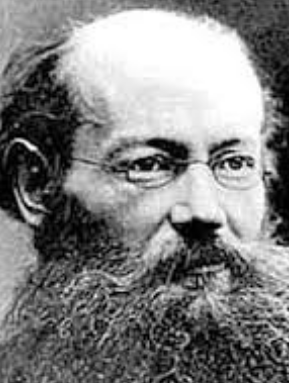
An aristocrat by birth, he became an influential anarchist. In the 1890s he synthesised Bakunin and Proudhon. His influential journals, le Révolté and La Révolte were published in Paris from 1885.
Locations
140 Rue Mouffetard. Editorial offices and printworks of Kropotkin’s le Révolté, whose presses were seized in on May 1 1890, and of la Révolte which succeeded it.
Lafargue first visited London and met Karl Marx in 1865. He married Laura Marx in 1868 and with Jules Guesde was one of the founders of the French Workers’ Party. Lenin came to see him on his first trip to Paris in 1895. Jaurès, Lenin and Keir Hardie all spoke at his and Laura’s joint funeral in 1911 after they committed suicide together.
Locations
47 rue du Cherche-Midi: Paul Lafargue and Laura Marx, his wife, move in to a flat here on 1 December 1868. In July 1869 Marx made a secret 6-day trip to Paris to see them (using the pseudonyme Alan williams). The couple committed suicide together here in 1911.
51 avenue de Flandre: In 1869-1870 Lafargue worked on Henri Rochefort‘s republican newspaper La Marseillaise with Victor Noir (before his assassination by Napoleon III’s cousin) and Prosper-Oliver Lissagaray.
One of the few leaders of the fragmented French Trotskyist left to actually put themselves up for an electoral test, in 1988 Lambert stood in the Presidential elections for a ‘Movement for a Labour Party’ and did miserably (116,823 votes).
In 1992 he founded the Parti des Travailleurs (Labour/Workers’ Party) that dissolved itself into the Parti ouvrier indépendant (Independent workers’ party) in 2008.
Arguably, one of his main legacies was the fact that a former member, Lionel Jospin, was prime minister in a cohabitation government with the corrupt President Jacques Chirac from 1997 to 2002, and that several leading trade unionists from the anti-Communist Force ouvrière trade union confederation acknowledged his influence.
Of Russian Jewish parentage Pierre Boussel joined the Communist Youth at the age of fourteen and became a Trotskyist soon afterwards when he failed to understand how the PCF could abandon its anti-militarist positions after the Soviet Union signed the Franco-Soviet treaty of mutual assistance in May 1935.
Some of the tiny numbers of Trotskyists and their sympathisers like Lambert decided to join Maurice Pivert‘s ‘Revolutionary Left’ tendency from 1935 and then the PSOP, the breakaway Parti socialiste ouvrier et paysan(Socialist workers and peasants party). This was set up in 1938 and had around 8-10,000 members.
The PSOP, however, decided quickly to expel those like Lambert who attended a meeting of ‘friends’ of the ‘Truth’ newspaper on May 30 1939. This had taken place at the Auger restaurant in the Brasserie du Commerce at No. 48, Rue des Archives, and the expulsions by the PSOP took place a few days later, on June 3 1939.
During the German Occupation Lambert worked clandestinely with the otherTrotskyists in the small circle. On February 15 1940 he was arrested and convicted of threatening the security of the state with a three-year jail sentence. He was being transferred during the collapse of the French army in May 1940 and was able to escape and reestablish clandestine contacts in Paris.
While working to rebuild the CGT under the Occupation, as early as October 1943 he argued for the unification of the divided French Trotskyist groups.
In 1952 the PCI split. Lambert led the faction that opposed Pablo‘s strategy of entry into the Communist Party and insisted on maintaining an open revolutionary organisation.
Within the Fourth International Lambert was aligned with James P Cannon in the USA and Gerry Healy in Britain, though he later broke with both. Over the years his organisation had several names, but the group was generally known by his name as the “Lambertistes”.
During the Algerian war the Lambertistes supported the Mouvement National Algérien of Messali Hadj, the bitter rivals of the FLN, who fought a savage war with their fellow nationalists, leaving some four thousand dead on French soil.
On 16 January 1955 Lambert and Piveau organised a meeting demanding the release of Hadj at No. 8 Rue Danton, in the meeting room of the ‘Knowledge Societies’ (Hôtel des sociétés savantes). This led to very bitter relations with the other French Trotskyists, who supported the FLN.
In 1968 it was a member of the Lambertist organisation, Yvon Rocton [1938-2008], who led the very first strike and occupation at Sud-Aviation in Nantes. That sparked off the wave of workplace occupations eventually involving ten million workers.
In 1988 Lambert stood in the presidential election, but obtained only 0.38% of the vote.
Lambert’s insistence on the importance of the history of the movement perhaps explains why a number of France’s most important left-wing historians have been members of his organisation – Pierre Broué [1926-2005], a specialist in the history of communism, Jean-Jacques Marie [b 1937], a biographer of Stalin, Lenin and Trotsky, Benjamin Stora [b. 1950], expert on the Algerian war, and Jean Marc Schiappa [b. 1956], an authority on Babeuf and Buonarroti.
One of France’s leading physicists Paul Langevin was the major French promoter of Einstein’s theory of relativity. He supported Dreyfus in 1898, opposed the use of chemical and biological weapons and in the 1930s opposed the fascists, joining the French Communist Party in 1944, the same year as Picasso.
A lawyer and key figure in the left republican resistance to King Louis-Philippe in 1846-1848. His call for universal male suffrage is enacted under the Second Republic. He lived in exile from 1849 to 1871.
George Sand (on the left in this critical cartoon) did write several of Ledru-Rollin’s ministerial directives between March and May 1848
Locations
10 rue François Miron: Birthplace of Ledru-Rollin
11 rue des Bourdonnais: Ledru-Rollin, Blanc, Cavaignac, Arago and Flocon set up the office of the republican democratic journal La Réforme at this address on 29 July 1843. On 24 February 1848 this is the headquarters of the left republicans, who draw up a left list here to become members of the Provisional Government.
14 Rue Davy: In 1847 Ledru-Rollin attends secret meetings with other republicans including Blanqui,Caussidière and Barbès. The police spy on the meeting place after being given information by an informer, but Ledru-Rollin narrowly misses being arrested.
Palais Royal garden: This is renamed the Palais National on 26 February 1848, and the Rights of Man club sets up there. Ledru-Rollin, Arago, Blanc, Flocon and Albert are involved as are Lamartine and others.
4 rue Serpente: Ledru-Rollin’s home in 1848 when he was Minister of the Interior in the provisional government.
Paris Town Hall, 10 place de l’ Hôtel de Ville: On May 15 1848 Ledru-Rollin and Lamartine give the orders to the National Guard to evict the demonstrators, who included virtually all those left republicans they had worked with over the previous ten years, from the Town Hall.Boulevard Bonne Nouvelle
81 Avenue Denfert-Rochereau: Ledru-Rollin’s home while he was organising the first elections using universal male suffrage in 1848.
4 Rue de Tournon: in 1848 the Hôtel de Montmorency was the town house where both Lamartine and Ledru-Rollin stayed in the centre of Paris, three minutes walk to the Luxembourg Palace. George Sand lived with her son just round the corner in the Rue de Condé while she worked for Ledru-Rollin between March and May 1848.
270-292, Rue Saint-Martin. Conservatoire des Arts et Métiers. After the vicious repression of the demonstration that turned into a riot of 13 June 1849 with cavalry charges at the demonstrators and seven being killed at the barricade at No. 261, in a protest against French troops being sent against the Roman Republic, Ledru-Rollin, Raspail, Arago and Considerant met at the Conservatoire to decide their next steps.
Marxist philosoper of art and space and time, Lefebvre joined the Communist Party in 1928 with other surrealists. Fired from his teaching post under Vichy in 1941 he joined the resistance. He left the PCF in 1956 and taught sociology at Nanterre from 1965 to 1968.
A Proudhonist supporter of the First International from 1865, she was one of the leaders of the Women’s Union during the Commune and helped build a barricade at the Place Pigalle and placed red flag on it. Deported to New Caledonia, she returned to France in 1879, and supported La Revue socialiste in the 1880s.
Already a well-known artist, in the 1930s Fernand Léger participated in anti-fascist marches and meetings, supported the Popular Front and joined the Communist Party aged 64 in 1945.
He trained at well known painting school, at 14 Rue de la Grande Chaumière, at the turn of the 20th century. Others who were trained there included Modigliani and Matisse.
By 1910 he had a studio in the Rue de l’ Ancienne Comédie, and was meeting other cubists every Tuesday at the Closerie des Lilas in the Boulevard du Montparnasse.
His interest in working people, and his concern about the need for mass education, emerged during his time in the trenches in the First World War. He wanted museums to open at night so ordinary people could visit them.
After nearly dying in a German mustard gas attack at Verdun Léger was demobilised and returned to live in Paris at 86, Rue Notre-Dame des Champs, where he lived for the rest of his life.
He joined the Association of Revolutionary Writers and Artists (AEAR) in December 1932. On 21 March 1933 he spoke at a meeting held in the masonic hall at 16, rue Cadet chaired by André Gide, protesting against the Nazi terror imposed after the Reichstag Fire of February 27.
In 1935 and 1936 he debated with Aragon about the direction of painting, arguing that there had to be a ‘new realism’ with its origins in modern life. Leger always defended individual creativity.
At the International exhibition of 1937 a huge mural of his was displayed at the Pavilion of Discovery.
Léger’s optimism for humanity is suggested in his 1937 mural ‘The Transport of Powers’
Another massive paintings was on display at the Solidarity Pavilion. It was called ‘The CGT’s working class trade unionism’. I can’t find it anywhere, but that same year he produced an office ground plan for the Popular Front’s Minister of Education, Jean Zay.
Drawing by Leger of ground plan for the office of Jean Zay in 1937
All through the pre-war period Léger attended demonstrations and signed petitions against fascism, so in October 1940, he went to the US, believing he could not continue to paint under the German Occupation.
He returned to France in December 1945 and immediately joined the French Communist Party – an action that coincided with Picasso‘s similar decision that naturally made much bigger headlines.
While accepting his membership, Léger remained trebly suspect to the PCF. Not only, like Picasso, did he not paint to political orders, and often produced what the PCF considered ‘art that was inaccessible to the workers’; but also, unlike Picasso, he had left France between 1940 and 1945; and he had gone to live and work in the United States.
With his second wife, one of his pupils, Nadia Khodossievitch, he opened a studio and art school at 104, Boulevard de Clichy. His last ten years saw him paint prolifically and gain an international reputation.
In 1947 Fernand Léger painted this portrait of Paul Eluard author of the 1942 poem, ‘Liberty I write your name’
Despite being overshadowed within the peace movement by Picasso’s dove, Léger, whose left political leanings and anti-fascist record resonated in the inter-war decades, continued to support the Communist-inspired peace movement and the Communist Party up to his death in 1955. while all the time refusing to paint in the ‘socialist realist’ style the PCF, following Stalin, preferred.
Vladimir Ilych Ulyanov (Lenin) first visited Paris in June 1895 to meet Paul Lafargue, Marx’s son-in-law, the first socialist to be elected to the French parliament and a leader of the French Workers’ Party, the POF, Parti ouvrier français. On December 3 1911, ironically perhaps given Lenin’s political distance from Lafargue, Lenin was one of those who spoke at Paul and Laura’s joint funeral after their suicides on November 25.
Lenin used his first visit to read about the history of the 1848 Revolution at the City of Paris’s Carnavalet Museum iat 23 rue de Sévignés that was created in 1880. It will be great to visit it again after its 2018-2019 renovation.
In 1902 and 1903 Lenin gave several university lectures under the pseudonym Mr Illine. He also spoke to Iskra political meetings at various locations in Paris while living most of the time in London. He would be put up by Russian exiles while lecturing in the Rue des Écoles.
Trotsky, also in exile, attended at least one of the lectures he gave on the Russian Agrarian question. On 25 February 1903 Trotsky and Lenin spoke at a conference on Iskra‘s agricultural policy.
In December 1902 Lenin and Trotksy, Krupskaya and Natalya, went together to see a show at the Comic Opera in Rue Favart. Lenin leant Trotsky a pair of shoes for the occasion since his were not presentable. Trotsky later complained they were too small: ‘I suffered awfully, and Lenin kept making fun of me the whole time’.
In 1902 and 1902 Lenin and Krupskaya were put up by a Russian exile in 3, Rue de l’Estrapade.
On December 10 1904 Lenin sat for the Russian Jewish sculptor Aronson in the Rue Vaugirard who produced a bust that won a gold medal at the Liege art show in 1906.
Lenin sat for Naoum Aronson in his studio iat 93 rue Vaugirard on December 10 1904. The bust was subsequently displayed in the Soviet pavilion at the 1937 World Fair in Paris.
A few years later Lenin and Trotsky met again in Paris. In 1910 they are recorded as playing chess together and with Guillaume Apollinaire at the La Closerie des Lilas café restaurant at the eastern end of the Boulevard du Montparnasse.
In May 1905 Lenin is recorded as having spoken at a meeting on ‘Our tasks’ at 8 rue Danton. He was back speaking again in May 1908 and used the Sainte-Geneviève library at 10 Place du Panthéon in research for his book on Materialism and Empirical Criticism.
in December 1908 on their arrival from Geneva after staying a couple of nights at the Hotel des Gobelins (24 or 27 Boulevard St Marcel), where Lenin’s younger sister was living at the time while studying at the Sorbonne, Krupskaya and he moved to a second-floor flat at 24 rue Beaunier with his sister and Krupskaya’s mother.
In July 1909 he and Krupskaya then moved to a 48m2 flat at 4 rue Marie Rose, living there until July 1912. It became the Paris Lenin museum, but was sold by the French Communist Party when it needed the money in 2007. [A plaque on the wall outside was taken down soon after.]
Lenin opened a bank account at the Credit Lyonnais branch at 19 avenue du Général Leclerc soon after arriving in Paris. The Café du Lion, just down the avenue at number 5, was where he used to organise meetings of the Bolshevik faction within the Russian Social Democrats.
Lenin used to regularly cycle the 20 minutes to the National Library in the Rue de Richelieu next to the Palais Royal until the bike was stolen one day. But Lenin’s life wasn’t all Bolshevism and research.
On October 13 1909 the news arrived in Paris that Spanish educationalist, anti-monarchist and anti-Church, Francisco Ferrer had been shot by a military tribunal after September’s bloody suppression of an uprising against Spain’s colonial war in Morocco at which Ferrer had not been present.
Hours later Lenin and Krupskaya (and Jean Jaures) went on a 20,000-strong protest demonstration that surrounded the Spanish Embassy (34 boulevard de Courcelles). When the cavalry were ordered to disperse the demonstrators, pistol shots killing a policeman answered the sabre attack,.
In 1909 the 40-year-old Lenin also quickly fell head over heels in love with the 35-year-old Inessa Armand, the mother of five who was also lecturing at the Russian revolutionary school in Paris. Observers wrote: ‘He doesn’t take his eyes off her’. In 1910 Lenin had organized for her to move into a flat next door to him at number 2, rue Marie Rose [No plaque there either.]
Not surprisingly, in 1910-12 Armand and Lenin used to pop out to the Cafe d’Orléans, at 43 avenue de Général Leclerc, 10 minutes from their flats. But that was knocked down and the current café with that name (on the opposite side of the Avenue) is even closer, but without enough charm to merit a drink when I walked by it.
When Lenin left Paris for the last time (heading towards Poland) in July 1912, his comrades held a farewell meal for him and Krupskaya at the Pavillion Montsouris restaurant at 20 rue Gazan.
Leroux evolved from the elitist Saint-Simon movement to socialism, the term he was the first to coin in 1834. He saw fraternité as being central but being challenged by both liberté and égalité. He fought for mutualist and associationist socialism. Lived in exile from 1851 to 1860.
He died under the Paris Commune in April 1871 and was buried in the Montparnasse cemetery.
Locations
35 Quai des Grands Augustines (at the time no 40): Pierre Leroux’s birthplace in a small bar run by his parents
6 rue Monsigny: Third floor office of the liberal newspaper Le Globe set up by Leroux and Paul-François Dubois in September 1824 before Leroux became a Saint-Simonien around 1830, when the paper becomes the organ of the Saint-Simoniens.
4 rue des Poitevins: Printshop where Leroux worked when he launched Le Globe, and were it was printed.
26 rue des Saints-Pères: Office of La Revue encyclopédique where Leroux first used the word ‘socialism’ in an article published in March 1824 called ‘From Individualism to Socialism‘.
20 rue de Savoie: Leroux was involved in setting up an illegal skilled workers’ association of Parisian typesetters here in 1839. Typesetting became the most unionised sector of Paris workers by the end of the 19th century.
87 boulevard du Montparnasse: Leroux and George Sand set up the journal called the Revue des Indépendants in 1841 in the Hunting lodge at this address.
14 rue des Moulins (at the time 32, rue des Moulins, on the corner with la rue Neuve des Petits Champs): The location of the offices of the Franco-German Annals, where Leroux met Marx, Proudhon, Bakunin, Cabet, Blanc and many other socialists in 1844.
Palais Royal garden: This was where in March 1848 Leroux, Barbès. Proudhon, Arago and others founded the Revolution Club.
12 ter rue Coquillière: The office of The True Republic in whose March issue Leroux, Sand and Barbès argue that ‘Without social reform, there is absolutely no true Republic’.
Paris Town Hall, 10 place de l’ Hôtel de Ville: On 15 May 1848 Leroux is one of those who take over the Town Hall and proclaim a new government, before being thrown out and then arrested.
3 rue Coq Héron: In 1848 the offices of two socialist papers set up by Leroux, ‘The Republic‘ and ‘The Organiser of Work‘ were both based at this address.
Leader of the Maoist Proletarian Left group in the early 1970s, Lévy became Sartre’s secretary from 1973 to 1980. He moved to Israel in 1997 and became a follower of the Rabbi Moshe Shapiro.
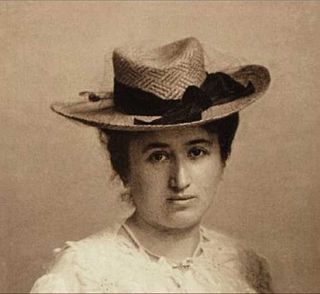
Rosa Luxemburg lived most of her 48 years a long way east of Paris, mainly in Warsaw and Berlin. But a new garden has been named after her in the 18th Arrondissement of Paris. The Rue Riquet garden is next to the railway lines leading into Paris’ Gare de L’Est. A few kids were playing in the Jardin Luxemburg when I walked round. Trains kept passing in the background.
The beautiful garden and play area opened in 2014, one hundred years after Luxemburg had spoken alongside the French socialist leader, Jean Jaurès, at a mass anti-war meeting in Brussels, on July 29 1914.
Rosa Luxemburg and Jean Jaurès spoke at a mass anti-war meeting in Brussels on 19 July 1914
Just two days before Jaurès was murdered and a week before the First World War broke out. Luxemburg had travelled to Belgium as part of the last desperate efforts of the Second International to stop the war. With Karl Kautsky and Hugo Haase she represented Germany at that emergency meeting. Keir Hardie was there too, representing Britain.
World War 1
In his last ever public speech, given at Brussels’ Cirque Royal, Jaurès congratulated the 100,000 Berlin workers who had demonstrated against war the day before. And he added: ‘You will allow me to especially pay tribute to the courageous woman, Rosa Luxemburg, who fans the flames of her ideals close to the heart of the German working class’.
Luxemburg had already spent a year in German prisons. She would return to Germany from Brussels to be jailed for most of the First World War.
She was born in Russian-controlled Poland in 1871. A big anti-Jewish pogrom took place in Warsaw in 1881, and this direct experience of anti-Semitism took the ten-year-old girl towards anti-racist internationalist politics.
Jogiches
The Lithuanian Leo Jogiches with whom Luxemburg fell in love in Zurich in 1890
At 16 she got involved with a small socialist group. At 18 she followed her brother and enrolled at Zurich University, where she met and fell in love with a Lithuanian student and already committed revolutionary socialist, Leo Jogiches.
Together they set up the Polish Kingdom Social Democratic party (SDKP) and after enrolling for a doctorate in Zurich, Luxemburg travelled to Paris to edit their new paper, Sprawa robot¬nicza (Workers’ Cause), whose first issue appeared in July 1893.
Plaque for the ‘International Activist’ Rosa Luxemburg put up in 2010 outside 21 rue Feutrier
Luxemburg stayed initially near the Sacré Coeur in northern Paris. She lodged with another Polish revolutionary, Adolf Warszawski (murdered by Stalin in 1937), and his wife. On International Women’s Day, 2010, one of the few plaques to leftists in Paris commemorating her was erected at 21 rue Feutrier.
In 1895 Luxemburg moved to a third floor flat at 7, Avenue Reille in the 14th arrondissement, sharing with another revolutionary, Cezaryna Wanda Wojnarowska.
While editing Workers’ Cause, Luxemburg regularly used to research her thesis at the Polish Library on the Ile St Louis and the French National Library at the Palais Royal (as did Lenin 15 years later). Her doctorate on the Industrial development of Poland was accepted at Zurich University in 1897.
Feelings
Luxemburg and Jogiches were political comrades and lovers for over half of their too short adult lives. But Luxemburg complained bitterly from Paris that all he ever wrote to her was about what she should put in the paper.
In one letter she wrote: ‘Dearest, I was so furious [with your last letter] that I wasn’t going to write again before I left [Paris]…. Your letters contain nothing, absolutely nothing that isn’t about Sprawa robot¬nicza … Not a word about anything new that has affected you personally…The only thing that unites us is the Cause and old shared feelings. I feel as little desire to come back to Zurich as I have to stay here…I’ve got masses of impressions and thoughts – but no-one to share them with! You?’
In 1898 she had a marriage of convenience with a German socialist to get German nationality and moved to Berlin. There, Jogiches finally joined her in 1900. Her intimate relationship with Jogiches ended in 1906 and during the next five years she had another lover, the son of Clara Zetkin.
German SPD
Luxemburg speaking at an SPD meeting in Stuttgart in 1907
In 1899 Luxemburg published ‘Social Reform or Revolution’, a critique of Eduard Bernstein. She criticised Lenin’s views on party organisation and advocated mass strikes rather than parliamentary activity.
Her growing political and theoretical influence in Germany, her public debates with Lenin about the centralized party and nationalism, and her criticisms of Bernstein made her a leading figure in the German Social Democratic Party (SPD).
These qualities, coupled with her speaking Yiddish, French, Polish, Russian and German, led her to become a member of the Second International Bureau in 1903. In 1905 her experience of the Russian Revolution led her to theorise the role of the mass strike as a way of transforming the working class from a reactive to a proactive historical force.
‘Women’s suffrage is the goal. But the mass movement to bring it about is not a job for women alone, but is a common class concern for women and men of the proletariat… the proletarian woman’s lack of political rights is a vile injustice.’
She ended her speech: ‘Fighting for women’s suffrage, we will also hasten the coming of the hour when the present society falls in ruins under the hammer strokes of the revolutionary proletariat.’ In 1918 she supported women’s sections being created within the Spartakus League.
After the German Social Democrats (as did the French Socialists and British Labour Party) voted war credits in August 1914, Luxemburg organised a group of resistors.
From jail Luxemburg continued to campaign against the war, and in 1917 created the Spartakus League as the far left of a new Independent SPD opposed to the war.
After the failed January 1919 Spartakus uprising that she had not encouraged but supported once it began, Luxemburg was arrested again.
Liebnecht and Luxemburg’s portraits are now displayed in the German Historical Museum in Berlin
On her way back to prison she was shot in the head by the officer commanding her guards. Her body was dumped in a canal and an army communique issued saying she had been killed by angry crowds. Karl Liebknecht was assassinated in the same way the same day.
Luxemburg’s presumed body was only finally recovered in May. By then, Jogiches, who had started asking questions about her murder, had also been arrested and then ‘shot will trying to escape’.
The Rue Riquet Rosa Luxemburg garden in December 2016
In winter it’s not always easy to find a red flower against a background of railway beams and shunter trains. But there was at least one in the Rosa Luxemburg garden when I walked through it.
Brought up a practising Catholic it was normal for Maire to initially join the Christian trade unionCFTC, Committed Catholics were all asked by the Catholic Church to affiliate to the Confédération française des travailleurs chrétiens (CFTC) that had been set up in 1919 to counter the menace of Bolshevism.
Maire, however, became an agnostic and was influenced by Mendes-France and he joined the ‘new left’ PSU in 1960 and continued to support workers’ control until the mid- 1970s.
He also was very active in the formation of the (non-religious) CFDT in 1964 and became its General Secretary in 1971.
The formation of what by the 2010s is France’s largest membership trade union, the CFDT (Confédération française démocratique du travail), was a key development. It emerged in 1964 taking with it nearly 90 percent of the then CFTC membership.
Responding to growing social tensions stimulated by De Gaulle’s tough incomes policy in a period of labour shortages and that eventually exploded in the strikes and occupations of May-June 1968, the overwhelming majority of CFTC members wanted a trade union centre that was both independent of the Catholic Church and more committed to the construction of a democratically structured economy and society. The 1964 report drafted by Maire motivating the change in name and statutes adopted by the founding congress described the new union’s common humanistic values:
Putting man before the machine, a man without money, trade union struggles are dominated by the demands of people at work, in society and in the world. It is by remaining faithful to the purpose of man, to the dignity of the individual – free, responsible, united – that it has always opposed totalitarianism of both right and left.
Quoted by Pierre Cours-Salies (1988: 83).
The new confederation retained many of the CFTC’s holistic values, but it also revisited the pre-1914 emphasis on trade union independence from outside influences – in its case from the Catholic Church.
The change to a secularised union resulted from the convergence of several trends. The new post-Second World War generation of CFTC activists and members were both younger and more likely to be manual workers than the older, generally white-collar workers. Their experiences in the Resistance had given them a stronger sense of working class solidarity than the earlier generation. There was also a new politics in the air.
The CFTC’s impatience with the French employers’ reluctance to permit any form of participation in the 1930s and 1940s had gradually led it to embrace a larger state role in the management of the economy and in arbitrating industrial relations. In the 1950s it attracted men like the young Jacques Delors, who ran its research centre between 1957 and 1961 and who was then appointed to work on the Fourth National Plan.
The new aim of ‘democratic planning’ the CFTC had embraced in 1959 further encouraged the revival of ideas of workers’ self-management and discussion of a ‘third way’ for advancing workers’ interests that lay somewhere between Catholicism and Communism. After 1968 it was this greater openness of the CFDT to ideas that encouraged the more dynamic Trotskyist groups to concentrate their members in that confederation rather than in FO.
The growing radicalism of the CFDT led it naturally towards a greater involvement in a perspective of struggle against the ‘blocked’ French society of the mid-1960s. Its values shifted towards a toleration of a societal form of bottom-up class struggle. While this was quite distinct from the top-down, structured and controlled, class struggle philosophy of the CGT, there nonetheless was a logic for the two confederations to come together and sign a joint action agreement in 1966.
At its 1970 Congress the CFDT embraced workers’ control, planning and collective ownership of the means of production. In many ways the CFDT had become more radical than the heavily bureaucratic CGT, still tied closely to the political line of the Communist Party.
However, with the PCF’s 1977 decision to end its left unity agreement with the Socialist Party, the growing economic crisis and the end of trade union growth, the 1978 CFDT Congress announced the beginning of a shift back to its traditional values of societal integration and away from those of class struggle.
Edmond Maire, CFDT general secretary from 1971 to 1988, then successfully ‘re-centred’ the CFDT on a more ‘moderate’ strategy of distancing itself from major struggles, such as the 1986 railway workers’ and student strike waves, and of associating itself as closely as possible with the concept of social partnership with the employers.
Maire also increasingly supported the employers’ argument that what was needed was more ‘social dialogue’ at firm-level – precisely the level at which French unions were weakest – and questioned the need for further legislative support for the trade unions, criticising the Socialist government’s ‘dirigiste and archaic conception of industrial relations’, and denouncing an ‘authoritarian left that puts a Jacobin state into the saddle’.
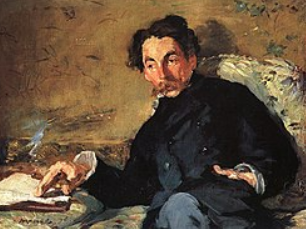
Stéphane Mallarmé was a major symbolist poet who joined Zola and others in 1898 just before his own death in campaigning for Dreyfus to be acquitted of treason and released in the defining dividing line between left and right in France.
Stéphane Mallarmé painted by his friend Édouard Manet, who did the illustrations of Edgar Poe’s ‘The Crow’ that Mallarmé translated in 1875.
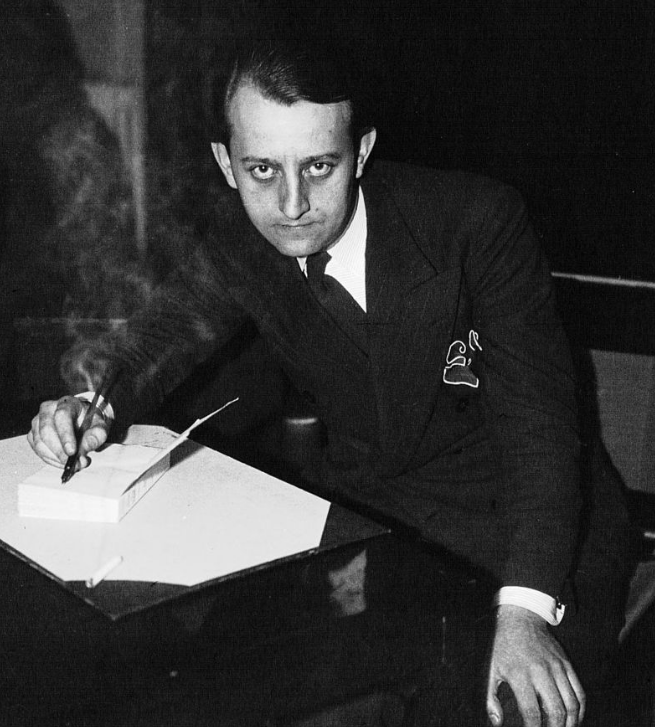
Left novelist and militant anti-fascist in the 1920s and 1930s, he organised French pilots and planes to fight for the Spanish Republic, and was wounded twice. He only joined the resistance in 1944 and from 1945 to 1958 supported De Gaulle and served as a minister from 1958 to 1969.
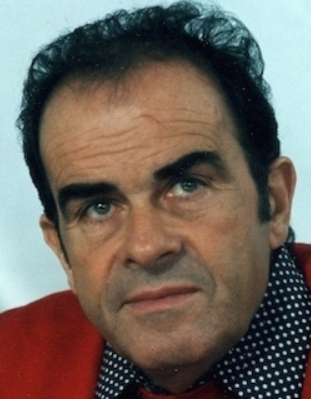
Marchais joined the Communist Party in 1947 and started to work full-time for the PCF in 1956. General Secretary from 1972 util 1994, he was also a deputy in the National Assembly from 1973 to 1997. His shift towards eurocommunism had little effect on the PCF’s declining membership and vote in the 1980s and 1990s.
Karl Marx’s Jewish father, Heinrich, studied law in the French law school in Mainz. He converted to Protestantism when Russia annexed the Rhineland to keep his legal job. Karl, himself, studied at the French secondary school in Trier on the Moselle river that flows through France to Germany.
It was not, therefore, by accident that the 25-year-old newly-married young neo-Hegelian atheist student chose to emigrate to Paris when political opposition became impossible in Colonge. Karl and Jenny von Westphalen lived in Paris from October 1843 to January 1845.
Jenny von Westphalen iat about the time of her 1836 engagement to her childhood friend in Trier, Karl Marx, whom she married in 1843. Over the next 14 years they had seven children, of whom only three daughters survived into adulthood.
They stayed in two different addresses in the Rue Vaneau. Arnold Ruge had invited Marx to Paris to work on the German-French Annals based at No. 22.
Editorial meetings of the Annals took place at Henry Bornstein‘s editorial offices of the fortnightly Vorwärts! Pariser Deutsche Zeitschrift Forward! Paris German Journal] that appeared in 1844. The meetings with French leftists included Marx as well as Etienne Cabet, Proudhon, Pierre Leroux and Louis Blanc. The German idea of collaboration didn’t go down to well with the French socialists, however, and only one double issue of the Annals was ever published in February 1844.
Ruge put the couple up at No. 23, where one flat was already the home of the German leader of the League of the Just, German Maurer. With approximately 60,000 German workers in Paris at this time the League became a migrant organisation, supported by many communistic skilled workers, and meeting regularly in a now unknown venue in the Cours de Vincennes that links the Place de la Nation to the Porte de Vincennes.
There were fields and a pond to the Eastern side of Rue Vaneau, part of the estate belonging to the then ruling Orléans branch of the Bourbon family, whose huge house is now known as the Matignon palace. This became the official residence of French prime ministers in 1935.
Marx published two articles at this time, the Critique of Hegel’s Philosophy of Right, and On the Jewish Question‘, where he began to develop the argument that the working class was the key agent of social change. Flora Tristan had also placed the working class at the centre of political action a year earlier, and in The Holy FamilyEngels had written a brief defence of her from the Young Hegelians. Between April and August 1844 Marx wrote the 1844 Paris Manuscripts now known as the Economic and Philosophic Manuscripts of 1844.
After their first child, Jenny, was born on 1 May 1844, Marx and Jenny rented a 3-room flat on the other side of the street at No. 38 Rue Vaneau. This was where guests such as Engels, Proudhon and the Russian, Bakunin came to discuss politics.
While he lived in Paris Marx met with many leftists and republicans. He visited Daniel Stern‘s salon on the Quai Voltaire. He met with Proudhonseveral times in a bar in the Rue Coquillière from October 1843 onwards, and also visited him in his student room home at 36 Rue Mazarine. Proudhon was also invited to Marx’s flat at 38 Rue Vaneau.
On one walk I strolled the 35 minutes from there, across the Pont Royal to the site of the Café de la Régence on the Rue St Honoré opposite the Palais Royal and where, today, No 155 Rue St Honore is at an angle with the Rue St Thomas du Louvre. This was where Marx met the 24-year-old German socialist Friedrich Engels on August 28 1844, and where Marx first talked to Engels about the concept of historical materialism.
Friedrich Engels in his mid-20s, about the time he began working with with Marx on The Holy Family
Marx, then 26, had read and liked Engels’ articles on the Condition of the Working Class in England, and they had corresponded. So it wasn’t an accidental meeting. Upstairs was the centre of the French chess circle – and allegedly characters as diverse as Robespierre, Napoleon and Louis Philippe had all played chess there (not together!). The cafe also doubled as one of Paris’ four cafe/shop post offices at the time.
After agreeing to collaborate with Marx on what was published in 1845 as The Holy Family, Engels continued on his way home to Germany on September 6 1844. By then the core of what became known as ‘Marxism’ had already taken shape in Marx’s thoughts.
Marx was expelled from Paris to Brussels on February 3 1845 after an article he wrote in Vorwärts resulted in pressure being put on Guizot, Louis-PHilippe’s prime minster, by the Prussian king. There, Marx completed the Theses on Feuerbach, arguing that the world only changes through actual, physical, material activity.
Marx was briefly in Paris again in 1848 during the revolution before leaving for Cologne in April. On 5 March 1848, after arriving from Brussels he spoke at a meeting of the Central branch of the Society for the Rights of Man and the Citizen in the Rue St Martin, Marx spent several nights at the Hotel Manchester at 1, Rue de Gramont.
After a few nights there he moved in to the headquarters of the German Communist League at 10 rue Commines (the old Rue Neuve de Ménilmontant) in the Marais. While he was in Paris on March 8 he helped found the German Workers’ Club, and attended meetings of the German Democratic Club that met in the Mulhouse Bar at 8, Boulevard des Italiens. Others present at that time were Ludwig Feuerbach and Arnold Ruge.
Marx left Paris for Cologne at the beginning of April 1848, where he would edit ‘The New Rhine gazette’.
Back in Paris again the following year after his expulsion from Germany, Marx and his family lived from June to August in a couple of rooms in the Rue de Lille under the name of Meyen.
Marx was an observer of the start of the Boulevard Bonne-Nouvelle demonstration against French intervention against the Roman Republic on June 13 1849. The Left Republican contingent set off from their meeting place at 6, rue Thérèse (then called the Rue du Hasard).
Marx’s next visit to Paris was under the false identity of Alan Williams to spend a week in July 1869 with his daughter Laura, and son-in-law, Paul Lafargue at their home at 47 Rue du Cherche-Midi.
Paul and Laura Lafargue about the time they moved in to the Rue Hautefeuille in 1869.
Marx’s final visit to Paris was in June 1881 . He stayed with his Parisian first-born daughter, Jenny, at her and Charles Longuet’s house in Argenteuil for three months after returning (still ill) from a break in Algeria that Engels had hoped would improve his health.
Jennychen’s own health was poor, although she disguised this from her father. In September 1881 she gave birth to a fifth child [Jenny Longuet (1881-1952)] before dying four months later at Argenteuil from bladder cancer. She was 38 year old.
Marx’s wife Jenny died in December 1881, shortly after he returned to England. The news of Jennychen’s death devastated him early in 1882. He died in London just over a year later at 64 on 14 March 1883 and was buried in Highgate Cemetery in an area reserved for agnostics and atheists.
The only deputy who voted against French athletes competing in the 1936 Berlin Olympics was the youngest member of the national assembly, the son of an active Dreyfusard non-practising Sephardic Jew: Pierre Mendès-France.
In the 1950s and 1960s Mendès-France shifted to the political left and became a major influence on left reformist socialism.
There was only one vote in the National Assembly against sending French athletes to the August 1936 Berlin Olympic games: Pierre Mendès-France. The Communists abstained. The athletes won 7 gold medals and 6 each in silver and bronze.
As a young Paris-born lawyer, aged just 25 (the minimum age then permitted) Pierre Mendès-France was elected as a Radical Party deputy in 1932. At 17 he had joined the Ligue d’action universitaire républicaine et socialiste (Republican and socialist Action League) fighting for free speech in the universities and against the growing extreme right, and was elected its leader in 1927.
Along with Jean Zay, Mendès-France was a left ‘Young Turk’ within the Radical Party, arguing against its majority centre-right for the alliance with the Socialists and Communists that became the Popular Front. He became a junior minister in Blum‘s second short-lived government in 1938, and argued for greater material support to be given to the Spanish Republican government and against appeasing Hitler. The rejection of his anti-corruption and austerity economic plan by the Senate led to Blum resigning as Prime Minister after just one month.
Mobilised in 1939 he asked to be transferred from Syria to a potential combat zone. He was lightly wounded in the North of France in June 1940. He returned to Paris and then immediately followed the other National Assembly deputies to Bordeaux. He, Zay and others who wanted to continue the fight, heard De Gaulle’s London appeal for resistance and boarded Le Massilia steamboat that was heading for Morocco. Once there he was arrested by the Vichy authorities on August 31 1940, forcibly returned to France and imprisoned at Clermont-Ferrand.
On May 9 1941 he was tried for desertion before a military tribunal and sentenced to six years imprisonment. A month later he escaped and made his way to Switzerland and then Portugal before getting to London.
He joined the Free French Lorraine squadron of French bomber aircraft within the RAF, and flew several missions before he became Finance Commissioner in De Gaulle’s Algiers provisional government in November 1943.
The Lorraine (342) RAF Squadron was set up with Free French aircrew in 7 April 1943 at RAF West Raynham to carry out daylight bombing raids on France.
In July 1944 Mendès-France, a supporter of what became known as Keynesianism, led the French delegation at the Bretton Woods conference, where Keynes largely reshaped the global monetary system. In September PMF (as he became known) was made Economics Minister, but resigned from that in April 1945 in disagreement with De Gaulle’s economic policy.
PMF’s political conviction that capitalism had to be free but tightly constrained led him to create a left Republican current. However, although re-elected as Deputy for the Eure constituency to the North-West of Paris in 1946, initially PMF largely played only an international role, first in the World Bank and the International Bank for Reconstruction and Development, and helping create the International Monetary Fund.
This changed with PMF’s growing criticism of the French war in Indochina. After the catastrophic defeat of the French army at Điện Biên Phủ on 7 May 1954, René Coty, the second president of the Fourth Republic, invited PMF to form a government. On June 18 he promised to bring peace in Indochina within a month, and his nomination was overwhelmingly approved by the National Assembly.
The French army was humiliated by Ho Chi Minh‘s Viet Minh troops under General Giap in the May 1954 Battle of Dien Bien Phu. Half of the French troops were killed leaving 11,721 prisoners, of whom only a third survived the 500 km forced march to prisoner of war camps.
By July 20 1954 the Geneva Peace Agreement had ensured France’s withdrawal from Vietnam, Laos and Cambodia, and as prime minister and minister of Foreign Affairs, PMF also granted self-government to Tunisia.
PMF’s government collapsed in February 1955, four months after the start of the Algerian war of independence, brought down by the votes of Communist, centre-right and extreme right (Poujadist) deputies.
In January 1956 PMF’s centre-left Republic Front secured 80 deputies (with Mitterrand’s group) in national elections but the Socialist leader, Guy Mollet, with 95 deputies became prime minister. PMF resigned from that government in May 1956 questioning its pursuit of the Algerian war.
In June 1958 PMF was one of the most outspoken French politicians opposed to De Gaulle coming to power on the basis of the military coup by the French Army in Algeria.
Leading the huge 28 May 1958 anti-fascist
demonstration in defence of the Republic were Pierre Mendes France (2nd left), Edouard Daladier (in raincoat) and Francois Mitterrand (sixth to the left). Jacques Duclos of the PCF was also present. The same day the President Coty asked De Gaulle to form a government.
In the September referendum on the new Constitution putting all political power into the hands of a president elected by universal suffrage PMF campaigned against De Gaulle. He then lost his seat as a deputy in the October 1958 general election.
PMF resigned from the Radical Party, which supported the Fifth Republic constitution. For the first time he openly declared himself a socialist.
I’ve always defended, even at the heart of the Radical Party, ideas that made those who criticised me consider me a socialist. And it’s true in the sense of the socialism of Jaurès and Léon Blum, because I think I have learned from their experiences and have understood their message.
In October 1959 PMF joined the new Parti Socialiste Autonome (PSA), that stood for democratic, humanist and innovatory socialism. In May 1960 this group merged with other parts of the French New Left to become the Parti Socialiste Unifié (PSU).
He was elected a PSU deputy for the Isère constituency in March 1967, and on May 27 1968 he was the most significant mainstream politician to attend the Second Left’s 30,000-strong meeting at the Charléty football stadium. Called by the non-PCF and non-revolutionary left student and worker trade unions and supported by the PSU it provided an opportunity for PMF to speak that he did not take.
The huge Second Left meeting at the Charléty football stadium on 27 May 1968 called by student and worker trade unions
PMF’s presence, however, led to his losing some PCF support in the June 1968 elections when he narrowly lost his seat. He resigned from the PSU and embarked on a disastrous joint presidential ticket campaign with the SFIO’s Gaston Defferre in 1969. Ill health in the 1970s effectively ended his political career.
The statue of Pierre Mendes-France replaced that celebrating Louise Michel, August Blanqui and Elisee Reclus. Surely Mitterrand could have found some other location in the garden?
After his death in 1982, Mitterrand, who had been given a ministerial post by PMF in 1954, commissioned a statue to his mentor that was erected in the Luxembourg Gardens, sadly replacing Emile Derré ‘s ‘Column of kisses’ tribute to French anarchism and insurrectionism in the persons of Louise Michel, Auguste Blanqui and Elisée Reclus.
A postcard of the Cornice of Kisses in the Luxembourg Gardens around 1910
In 2002 the newly-elected Socialist Party majority on the Paris council voted to call the Western end of the avenue de France that leads to Mitterrand National Library of France, the avenue Pierre Mendes France.
A teacher, she became a republican, feminist and anarchist in the 1850s and 1860s. She was one of the first women to take an active part in the defence of the Paris Commune in 1871. On her return from her deportation in 1880 she campaigned until her death for women, strikers and anarchism.
So on what was a cold wet miserable day in Paris and the anniversary of a murder that some see as helping change history, I decided just to walk near my flat to follow in some of Louise Michel’s footsteps.
Pierre Bonaparte murdered the unarmed Victor Noir and is acquitted. Louise Michel is among the 100,000 who join the funeral protest
On January 12 1870, in a temper tantrum, Napoléon III’s cousin murdered a 21-year-old journalist, Victor Noir. He had come unarmed to Prince Pierre-Napoléon Bonaparte’s Paris house at 59 rue d’Auteuil to act as a witness to a duel between the Prince and a Corsican republican journalist. The republican had taken umbrage at the Prince publishing an article describing Corsican republicans as ‘traitors and beggars’ who deserved to have their ‘guts roasted in the sun’.
In a verbal row in his living room, the Prince pulled out a gun and shot Victor Noir.
As befits a close relative of the Emperor, Pierre-Napoléon was acquitted of murder very soon after. Even before Napoleon III stumbled into the Franco-Prussian war of July 1870 republican sentiment was on the rise. Louise Michel, disguised as a man, and with a knife concealed in her clothes, was one of the 100,000 crowd who attended Noir’s funeral.
Moral democracy
Michel worked as a teacher outside and then within Paris before the 1871 Commune
Louise Michel was then aged 40. The illegitimate daughter of a chamber maid she had become a teacher, moving to Paris in 1856, staying first in the Boulevard des Batignolles and then in the Rue du Château d’Eau. There, she became increasingly involved in radical democratic and then socialist and revolutionary clubs.
With funding from her mother, she opened her own day school in the working class 18th arrondissement in 1865. She was then living in the Rue Houdon. In 1868 she was also teaching in a school in what is now called the Rue Championnet.
In 1869 police records suggest she had become Secretary of a club called ‘The Moral Democratic club’ whose aim was to help working women live by their work.
On December 1 1870 she spent two days in jail for the first time, for having been involved in a women’s demonstration. By then she was president of the Republican Women’s Vigilance Club of the 8th arrondissement and soon after became director of a school in the Rue du Mont Cenis.
Paris Commune
Michel was one of the first women to join the Communards fighting on the barricades
On January 22 1871, dressed in National Guard uniform, she fired her first rifle shot (in the air) outside the Paris Town Hall, as the city began to mobilise against the inertia of the new government. She fired many more during the battles on the barricades between the 21 and 24 May.
Her feminism and belief in education combined on 12 May 1871 when, with other supporters of the Paris Commune created on 18 March, she opened a school to teach draftsmanship, modelling and wood carving (‘industrial art’) to girls, at 7, Rue Dupuytren.
This short street is a favourite of mine because it is named after Baron Guillaume Dupuytren, who both treated Napoleon Bonaparte’s hemorrhoids and gave his name to the Viking-origin genetically-transmitted disease that as a sufferer I call ‘bendy finger’. (Thanks dad!)
Michel’s girls’ school lasted all of two weeks before disappearing in the bloody week of May 21 to 28, when the Commune was brutally suppressed and between 20,000 and 30,000 killed. Today Dupuytren has four perfume/chemist boutiques and three hairdressers.
Louise Michel volunteers to take the place of her mother as a prisoner of the Versaillais soldiers on May 24 1871
On May 24 Louise Michel learned that her mother had been captured by the Versaillais troops. So she arranged to be taken prisoner in exchange for her mother’s release. She was sentenced to be deported and in August 1873 was shipped off to the penal colony on New Caledonia in the South-West Pacific.
She arrived at Nouméa (Port-de-France) in December 1873. In 1878 she openly supported the indigenous anti-colonial revolt.
Michel returned to Paris on 9 November 1880 via Melbourne and London after the general amnesty for the Communards. 6,000 supporters came to meet her and the other 550 who were shipped home to Dieppe and arrived with her at the Gare St Lazar station.
Michel was jailed for 6 months after the 9 March 1883 unemployed marchers stole bread from bakeries in the Rue du Four
She immediately threw herself back into agitation. In March 1883 she and Émile Pouget (1860-1931) led a demonstration of some 500 unemployed workers and children from the Invalides Esplanade along the Boulevard Saint-Germain to the Rue du Four, where three bakeries were invaded and largely emptied by the demonstrators.
Michel was carrying a black piece of cloth at the end of a broom in mourning for the dead of the Commune and for the starving Parisians as they marched, and this soon became the black flag associated with anarchism.
In July 1883 she was sentenced to six years in the Saint-Lazare women’s prison (finally closed in 1935). Pouget was sentenced to 10 years. Michel was only released after an 1886 presidential grant of mercy to her and other anarchists, including Peter Kropotkin.
Michel was jailed again for four months in 1886, after speaking at a meeting in support of the Decazeville striking miners, along with Jules Guesde and Paul Lafargue.
Michel was shot at in 1888 but refused to make a complaint against her attacker
In 1888 she was shot while speaking at a public meeting in Le Havre, but as an anarchist refused to support the state’s prosecution of her attacker.
In 1890 she was jailed again while mobilizing for the May Day demonstration and strike. Amnestied she refused to leave her cell while others were still in jail, and the government tried to get her committed as ‘irresponsible for her actions’ to an insane asylum.
Concerned about this threat she then moved to London and opened an international school for anarchists. Closed down after the London police found explosives in the basement, she returned to Paris permanently in 1897 living in the Rue Jacob and resumed speaking tours all over France.
Michel continued to campaign until her death at 75
She died in Marseille in 1905 after returning from a speaking tour in Algeria.
Around 120,000 people followed Michel’s remains from the Gare de Lyon station to the Levallois cemetery in north-west Paris. In 2005 a garden just below the Sacré Coeur monument was renamed the Square Louise Michel. The Sacré Coeur had been built between 1875 and 1914 by right-wing Catholics to beg God for forgiveness for the sin of the Paris Commune.
There’s now a tiny plaque to the Paris Commune on a wall in the Luxembourg Garden. Hundreds of Communards were summarily executed there during the ‘Bloody Week’ of May 1871. But from 1906 to 1984 the gardens also had a memorial column sculpted by the anarchist sympathizer Emile Derré.
Louise Michel is shown kissing love and goodbye to Elisee Recl;us. The two other kisses sculpted represent tenderness (with maternal instincts) and consolation (with Michel kissing Auguste Blanqui)
Originally called ‘A dream for a People’s House’ Derré’s column became known as the ‘Cornice of Kisses’: its three images show tenderness with a mother kissing a child, the lovers’ goodbye kiss (featuring Michel and Reclus) shown above, and a consolation kiss (featuring Michel and Blanqui). Michèle Audin (author of La Commune de Paris blog) found the wonderful postcard of the column when it was still in the Luxembourg Gardens.
A postcard of the Cornice of Kisses in the Luxembourg Gardens taken around 1910
The Louise Michel column was replaced by a statue of Pierre Mendès-France in 1984 on the order of Pierre’s friend, President François Mitterrand. The Kisses column was then unceremoniously dumped, forgotten and was only finally reborn in the old Northern textile town of Roubaix in 1997.
What a treat, I thought at the end of my short walk in the rain, to go to one of the bakers Louise Michel was supposed to have helped pillage in 1883 and buy a baguette (at prices that are still controlled right across France).
But the Rue du Four (Road of the Oven) no longer has a single bakery. The closest to a shop with anything to eat was this quick crepe and sandwich bar. I walked home disappointed. The drizzle was getting worse as I passed the new shiny Marks and Spencers food store in the totally renovated St Germain covered market.
I never imagined I’d ever think anything really positive about François Mitterrand, whose bending before the neo-liberals in the early 1980s helped reinforce Thatcher’s TINA argument (‘there is no alternative’).
Mitterrand’s relationship with socialism has been rightly described as ‘complex’. After escaping from a prisoner-of-war camp in 1941, he worked for the Vichy Government but in 1943 joined the resistance.
In 1946 he opposed the nationalisations of significant parts of French industry and supported the liberalisation of the economy. A government minister from 1947 he began to move to the centre-left, while remaining strongly anti-Communist.
In 1954 he became Interior Ministry in the Mendès France government that ended France’s colonial occupation of Indochina, but he did not resign from the Guy Mollet government in protest against its military response to the Algerian war.
Mitterrand played an important part in bringing the socialists together around his presidential candidature in the mid-1960s, and kept presenting a left alternative to Gaullism (often as a single individual).
Mitterrand secured 44.8% of the vote to De Gaulle’s 55.2% in the second round of the December 1965 presidential election. In 1958 Mitterand had marched against De Gaulle’s rise to power on the basis of an army Coup d’Etat in Algeria.
In 1971, as the Socialist party shifted to the left, Mitterrand stepped up his leftist rhetoric to become the acknowledged leader of the Socialists. He denounced monopolies and argued
Those who do accept the need for a rupture iwth capitalist society, I am telling you, cannot be Socialist Party members.
Mitterrand at the 1971 Épinay Socialist Party congress
Mitterrand’s 1981 election victory created a major shift to the left, but in 1983 Mitterrand performed a major U-turn, away from the wave of nationalisations and extensions of worker democracy back towards neo-liberalism.
In 1985 Mitterrand personally authorised the sinking of the Greenpeace ship, Rainbow Warrior, in Auckland harbour, in order to prevent it interfering with the extensive programme of nuclear tests he approved between 1981 and 1994 in the South Pacific atolls of Mururora and Fangataufa. One Greenpeace activist died as a result on 10 July 1985.
Lovers in Paris
But with the theme of left-wing lovers and Paris in my head I was surprised when I opened Le Monde on October 6 2016. It contained extracts from the journal Mitterrand kept during the first six years of his 32-year long relationship with Anne Pingeot.
When he was 47, Mitterrand fell in love with a 20-year-old art student and kept a diary of his relationship with her during the first six years of their 32-year-long companionship from 1964 to 1970.
Mitterrand used to paste cinema tickets and maps of where they had been together, and to scribble notes next to pictures cut from newspapers, as well as to write poems and letters and make little drawings, and plead for letters back.
I walked past 40, Rue Jacob, where Anne used to live with the couple’s daughter, in October 2016, looking for one of the schools that Simone de Beauvoir had attended fifty years before.
Anne Pingeot, who became an art historian and worked at the Musée D’Orsay (that was funded extensively under Mitterrand’s presidency) published Mitterrand’s journal five years after the death of Mitterrand’s wife, Danielle, and 20 years after Mitterrand died – in 1996, the same year as my father, James.
I have copies of letters James wrote to my mother, in which he too sometimes drew little amusing sketches, like one in 1941 showing him sleeping uncomfortably on a sofa on his first night in Coventry before starting work there.
In a letter written to my mother, Margot Davies, after his first night in Coventry in 1940 where he was sent to work in an aircraft factory, my father sketched himself sleeping upright on a horse-fair sofa – the only accommodation he could find that night.
One tragedy of the advent of the email and mobile phone era is that relationships that began in the mid-1990s will never again provide records half as tangible.
Mitterrand’s complex mix of hope, fear of losing Anne, warmth and love that come through just a few pages of ‘For Anne’ sound more genuine than much of his political history.
Beginning his life as a conservative Catholic, despite his moving a considerable distance to the left, he never had the historical left instinct that saw the roots of French socialism as lying with the lives of people like Louise Michel, August Blanqui and Elisée Reclus.
A postcard of Emile Derré’s submission to the 1906 Salon, the Cornice of Kisses, intended for a House of the People. This side of the cornice shows Consolation, with Louise Michel kissing Blanqui. The other sides feature love and tenderness, with her kissing Reclus
So it meant little or nothing to him to order the erection of a statue to his mentor Pierre Mendes France in the Luxembourg Garden in the place of the Émile Derré sculpture, Le Chapiteau des Baisers, now relocated to Roubaix in the north of France.